Women in climbing – report from Women on the Wall at Boulder Zona
11 March 2026
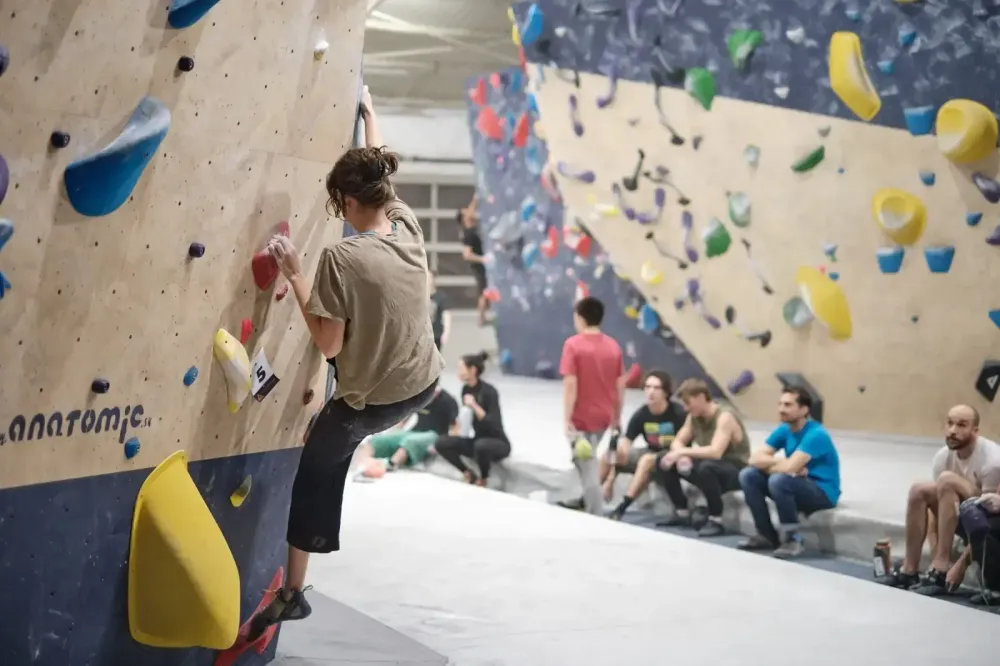
For one evening, Boulder Zona changed the rhythm of the gym: instead of the usual “everyone on their own problem”, the place was filled with a sense of togetherness, spontaneous tips and cheering. Women on the Wall was held to mark the upcoming International Women's Day and brought together participants who share the same sport but come with completely different experience.
For one evening, Boulder Zona changed the rhythm of the gym: instead of the usual “everyone on their own problem”, the place was filled with a sense of togetherness, spontaneous tips and cheering. Women on the Wall was held to mark the upcoming International Women's Day and brought together participants who share the same sport but come with completely different experience – from those who were putting on climbing shoes for the first time to experienced climbers for whom climbing is a regular part of their training.
From the moment you walked in, it was clear the focus was on the atmosphere: relaxed, supportive and with no pressure to perform. In a bouldering gym, where people usually count attempts and “tops”, that evening was more about technique, the feel on the wall and something that's hard to measure in numbers: the courage to give it a go.
What the programme looked like: from the warm-up to a shared “crux”
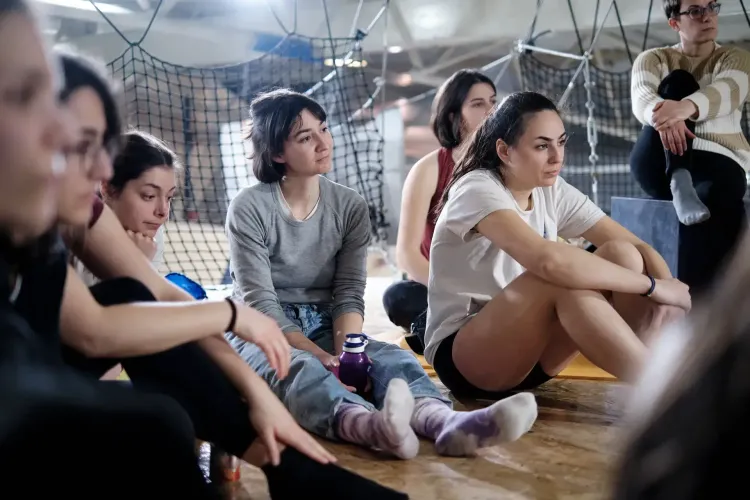
The event was designed so that every woman could find her place, whatever her grade or “form” on the day. After a short welcome, things kicked off with an organised warm-up in the mobility and stretching area, where the coaches highlighted the important little things: preparing your hands and forearms, activating your shoulder blades and controlling your breathing before stepping onto a problem.
For the main part of the evening, the gym was split into several themed stations:
- easier boulders for beginners, focusing on basic technique and landing safely
- technical mid-grade problems, where the “key” was balance, footwork and shifting your weight correctly
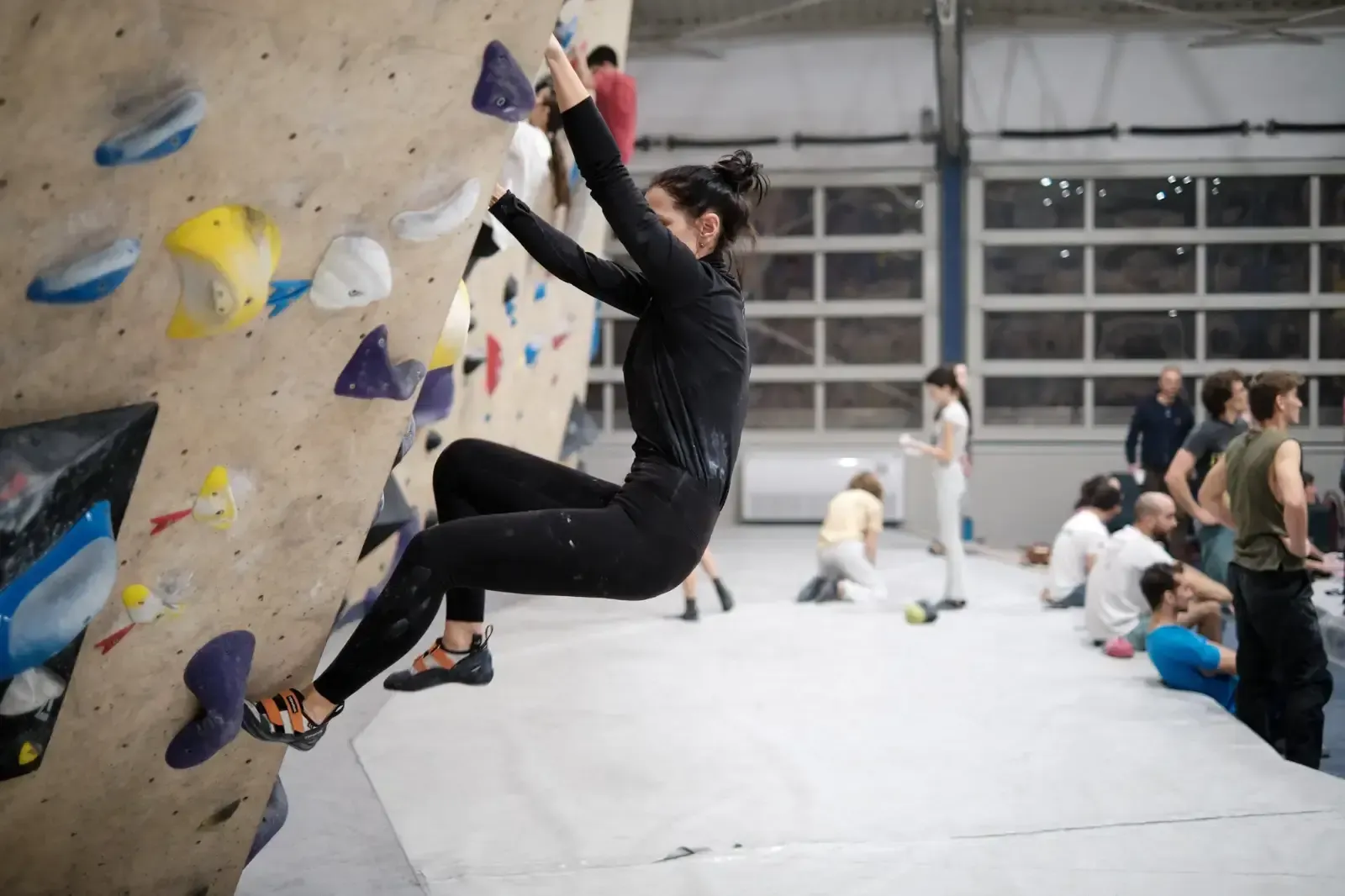
- more challenging boulders for advanced climbers, with dynamic moves and sequences that call for good coordination
This structure gave the programme a natural flow: beginners had room to learn without feeling they were “in the way”, while more advanced climbers got enough of a challenge to feel they'd had a proper session. In every corner of the gym you could hear the same thing: a quick explanation, then laughter, then loud cheering whenever someone matched on the top.
Participants of every level, one common thread: support without comparison
The best part of the Women on the Wall evening was the way the participants connected spontaneously. Sport climbing often puts the emphasis on discipline, focus and control, but this evening showed another side of the sport: a community that builds confidence.
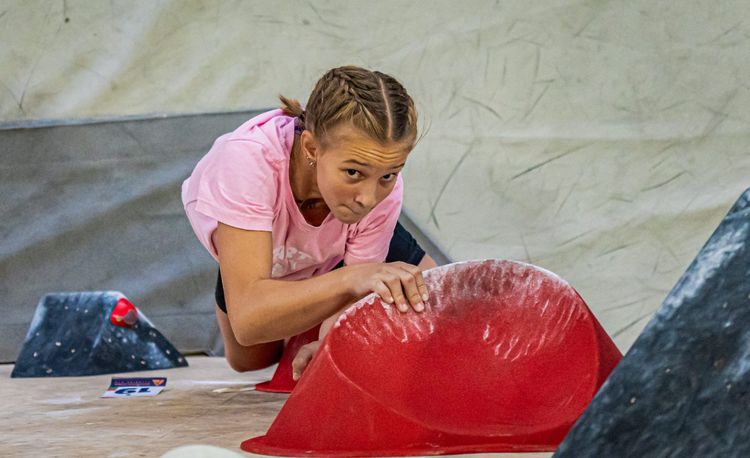
Beginners got the most out of small, practical tips that change how climbing feels: how to place your foot, how to turn your hip towards the wall, how to “rest” in a good position. For many, it was the first moment they felt that climbing isn't just about strength, but also about tactics, rhythm and how your body plays on the wall.
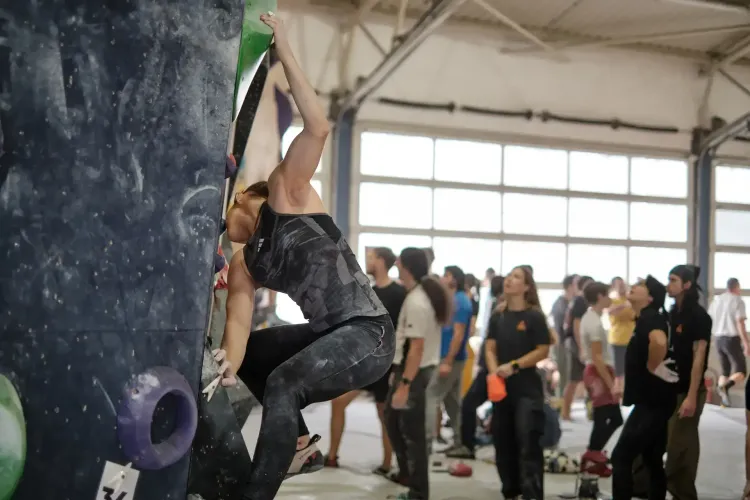
More experienced climbers, on the other hand, got the chance to climb with a different energy than at a regular training session. Instead of silence and concentration, a wave of encouragement swept through the gym: one more attempt, a change of beta, a small adjustment of the thumb on a hold – and suddenly the problem “gave in”.
Key moments: when “impossible” turns into “one more go”
Every competition is about a result, and every training session about a goal. But here, the most important “result” could be seen on people's faces after a successful top-out: surprise, pride and relief. One of the most memorable moments was when a group spontaneously gathered around a technical boulder that looked simple at first glance but had an awkward transition – a proper little balance crux. Within a few minutes, different participants suggested different approaches: a lower centre of gravity, a different grip, calmer breathing. In the end, several of them “put together” the sequence, and the applause was the same for everyone, whatever their level.
Another highlight was the part of the evening when advanced climbers showed what a good attempt on a dynamic problem looks like: not as a demonstration of “who can do it”, but as a way of sharing knowledge. When someone fell on the last move, there was no frustration in the air, just a collective: “You've got this, just one more go.” A message like that is often worth more than any medal.
Why events like this change the sport: visibility, motivation and an easier way into climbing
Climbing is a sport that hooks you quickly, but it can also feel closed off to people who are just walking into a gym for the first time. Events like Women on the Wall lower that barrier: they make room for questions, mistakes and learning without embarrassment. That is exactly where long-term motivation is built – not just through a course or a programme, but through the feeling that you belong.
At Boulder Zona this was especially clear thanks to the variety of the space: from the kids' area and standard boulders to specialised training boards like the Moon Board and Kilter Board, which many tried for the first time without worrying that they “weren't ready”. In conversations, people often mentioned how climbing helps outside the gym too: better body control, more confidence and a clearer relationship with their own limits.
The message of Women on the Wall: a woman on the wall isn't the exception, she's part of the community
Although the Olympic Games have raised the profile of sport climbing in recent years and opened up space to talk about the discipline more widely, events like this one add the more important, everyday element: empowerment through experience. Not by comparing who won what or which result is “worth” something, but through climbing together, sharing beta and confirming that every level has its place.
Women on the Wall at Boulder Zona left the impression of an evening when climbing went back to its purest form: moving on the wall, learning, playing and connecting, with a strong message that women's presence in climbing is natural, visible and growing louder all the time.