Campus Board without injury: when to even touch it
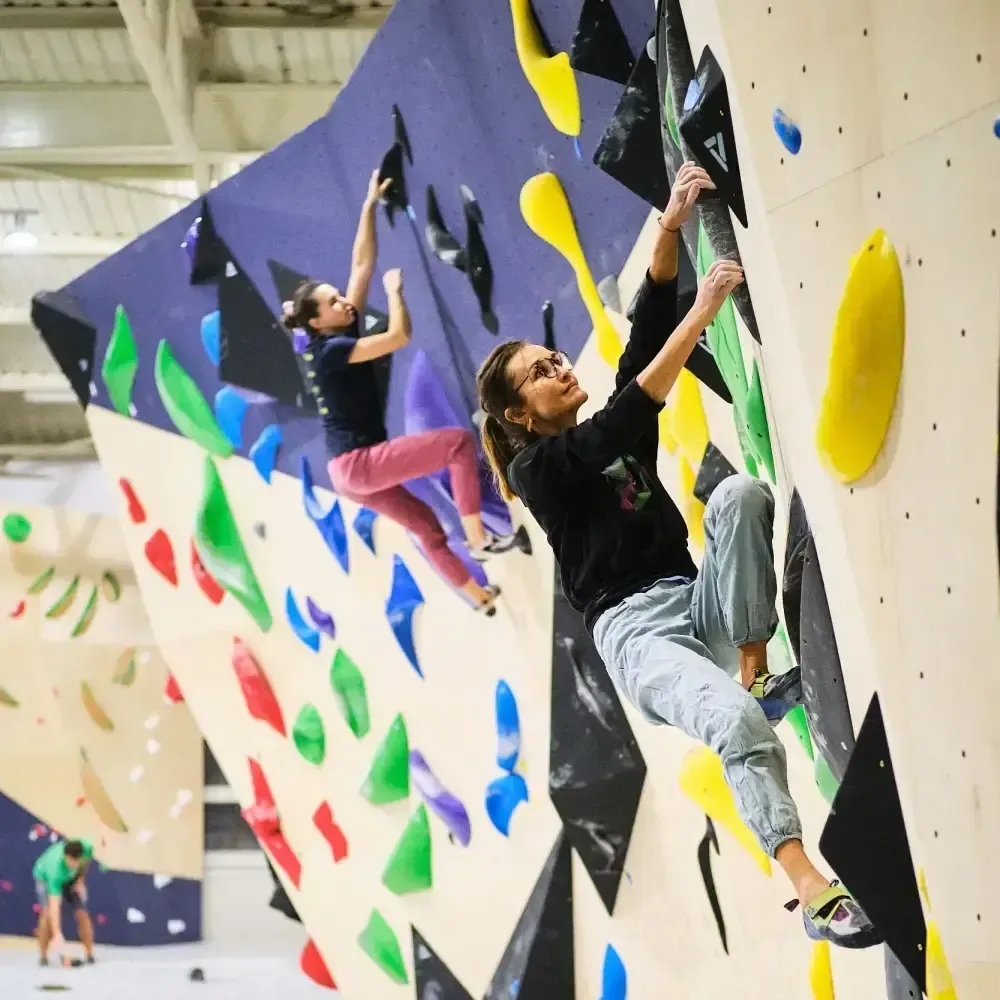
The Campus Board is one of the most demanding tools for building climbing strength, but also one of the most common sources of trouble when it's used too early, too often or without a clear plan. Its purpose isn't to prove how strong you are, but to apply a precisely measured load to your fingers, shoulders, core and nervous system. For many climbers, the best progress won't come from getting on the Campus Board early, but from climbing better, refining technique and training smarter.
What the Campus Board is and why it's so demanding
The Campus Board is an overhanging board with rungs of different sizes that you move along using your hands, usually without using your feet. That kind of movement puts a huge load on your fingers, forearms, elbows, shoulders and whole body. Unlike a regular boulder problem, there's very little room to compensate with your feet, hips or better positioning.
That's exactly why the Campus Board is so effective at building power and contact strength, meaning the ability to latch a hold quickly and securely in a dynamic move. But the very same mechanism makes it risky for your tendons, pulleys, elbows and shoulder girdle. If your body isn't ready, the load doesn't act as a stimulus for progress, but as excessive stress.
When the Campus Board actually makes sense
Using the Campus Board only makes sense once you have solid technique, enough experience and a good base of strength. That doesn't mean you have to climb the hardest problems in the gym, but you do need to understand your own body and be able to tell the difference between effort and pain.
A good sign that you're ready is being able to climb several hard boulder problems in a session in a controlled way without your form falling apart. If your movement breaks down as soon as you get tired, if your fingers often hurt after climbing or if your warm-up is regularly too short, the Campus Board probably isn't the right tool yet.
For beginners, the most useful training is still on the wall, the Spray Wall or boulder problems that demand footwork, precise hip positioning and an understanding of balance. Technique has to come before raw strength, because a strong climber with poor movement patterns often just gets injured faster.
Who should avoid the Campus Board
The Campus Board isn't suitable for children, complete beginners or climbers coming back from a finger, elbow or shoulder injury. Young climbers are still developing their tissues, coordination and stability, so a safer approach for them is through play, technical tasks and gradually strengthening the whole body.
Caution is also needed for adults who are progressing quickly in bouldering. Muscles often adapt faster than tendons and connective tissue, so feeling strong can be deceptive. You may have enough strength for a hard move, but not structures prepared enough to repeat that same move week after week.
Skip the Campus Board if you have pain in a finger, tightness in your elbow, discomfort in your shoulder or a feeling that your grip isn't stable. Pain isn't a signal for “one more go”, but a sign that the load is too high that day.
Warming up before a Campus Board session
A proper warm-up isn't a formality, but a condition for using the Campus Board safely. Your body needs to be gradually prepared for intense movement, especially your fingers and shoulder girdle. A good approach includes a light general warm-up, joint mobility, shoulder blade activation and a few easier climbing problems.
Only after that comes the specific preparation: light hangs, controlled moves on bigger holds and gradually increasing the intensity. If you can't keep clean form on simple tasks, there's no reason to move on to harder exercises.
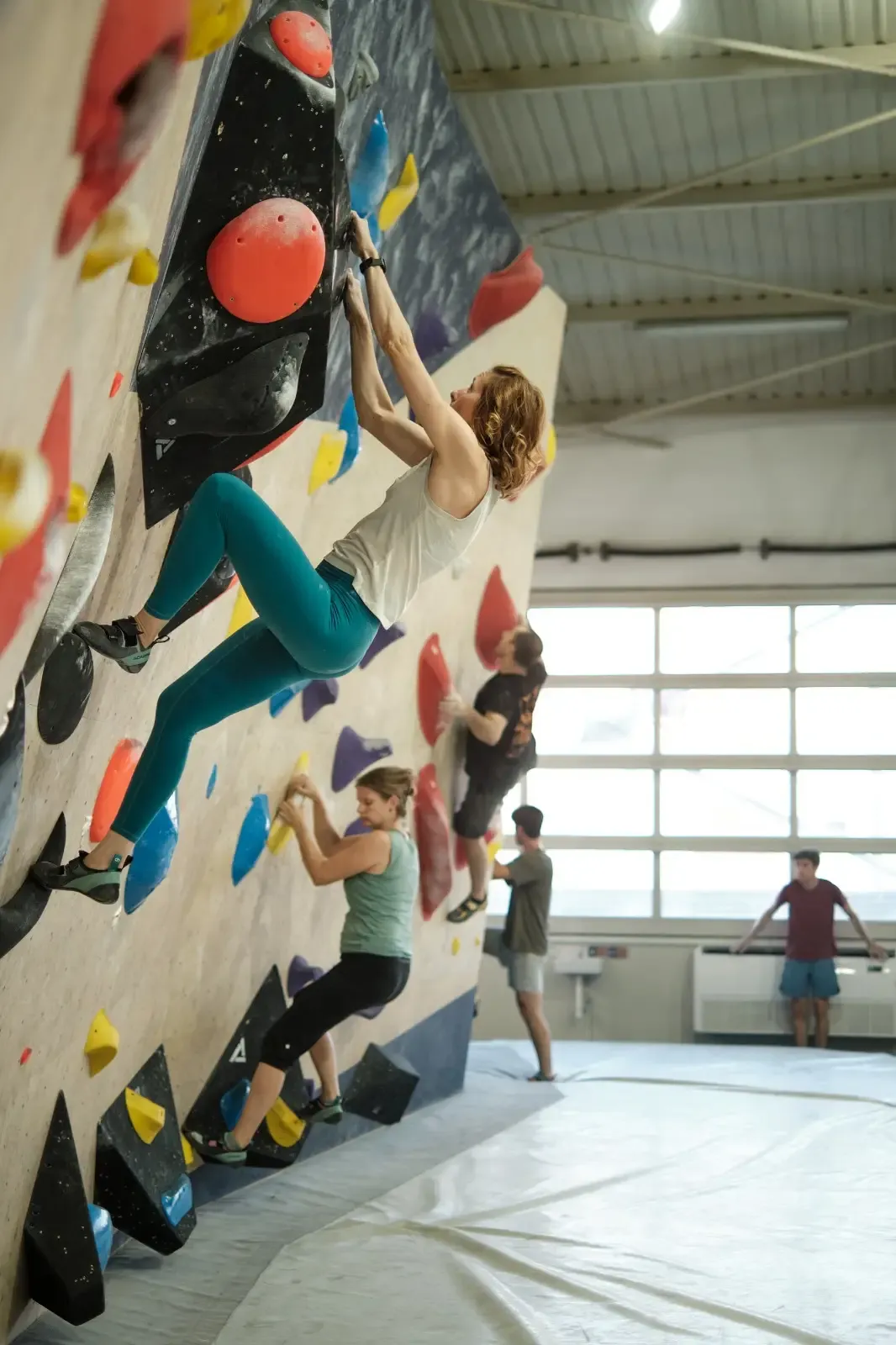
It's especially important that your first attempts on the Campus Board aren't maximal. Your nervous system, fingers and shoulders need time to adapt. One good day doesn't mean your body is ready for an aggressive programme.
What safe use of the Campus Board looks like
Safe Campus Board training starts with low volume. That means few sets, plenty of rest and clear control of every move. The goal isn't to “torch” your forearms, but to do a few quality reps with full concentration.
To start with, bigger rungs, simple moves and working with your feet on the board or with partial unloading are a better fit. Keep your shoulders active, your core stable and your contact with the hold controlled. If your body swings out of control, your shoulders sag or your fingers grab in a panic, the exercise is too hard.
The Campus Board is best used when you're fresh, after a full warm-up and before any exhausting climbing. This kind of training isn't something to do every day. Tendons and joints need more time to recover than muscles, so the gap between intense sessions is key to long-term progress.
The most common mistakes that lead to injury
The biggest problem isn't the board itself, but the way it's used. Climbers often move too early to small rungs, too many reps or dynamic moves they can't control. Another common mistake is using the Campus Board at the end of a session, when your fingers are already tired and your technique is weaker.
Comparing yourself with others is dangerous too. A climber who has spent years building strength can safely do an exercise that's far too risky for someone else. Readiness isn't measured only by the grade of the problems someone climbs, but also by the quality of their movement, shoulder stability, recovery and injury history.
If you measure progress only by the number of rungs you skip, it's easy to forget the real purpose of training. The Campus Board should make you a better climber, not become a separate test of ego, which is especially important when the most common beginner mistakes keep repeating.
A smarter path to strength
For most recreational climbers, the best development comes from a combination of good bouldering, technical tasks, mobility work and gradual strengthening. In a gym like Boulder Zona, with its different training zones, you can build strength using a wide range of tools: from boulder problems and the Spray Wall to more specific equipment such as the Moon Board, Kilter Board and Campus Board.
The Campus Board has its value, but only as part of a wider system. Used rarely, thoughtfully and with respect for the load it creates, it can be an excellent tool for advanced climbers. Used too early, it becomes a shortcut to a finger, elbow or shoulder injury.
The best time for the Campus Board isn't when you first feel like trying it, but when your body, technique and training habits show they can handle that kind of work. Then every move has a purpose, and your strength grows without unnecessary risk.