The most common beginner mistakes in bouldering
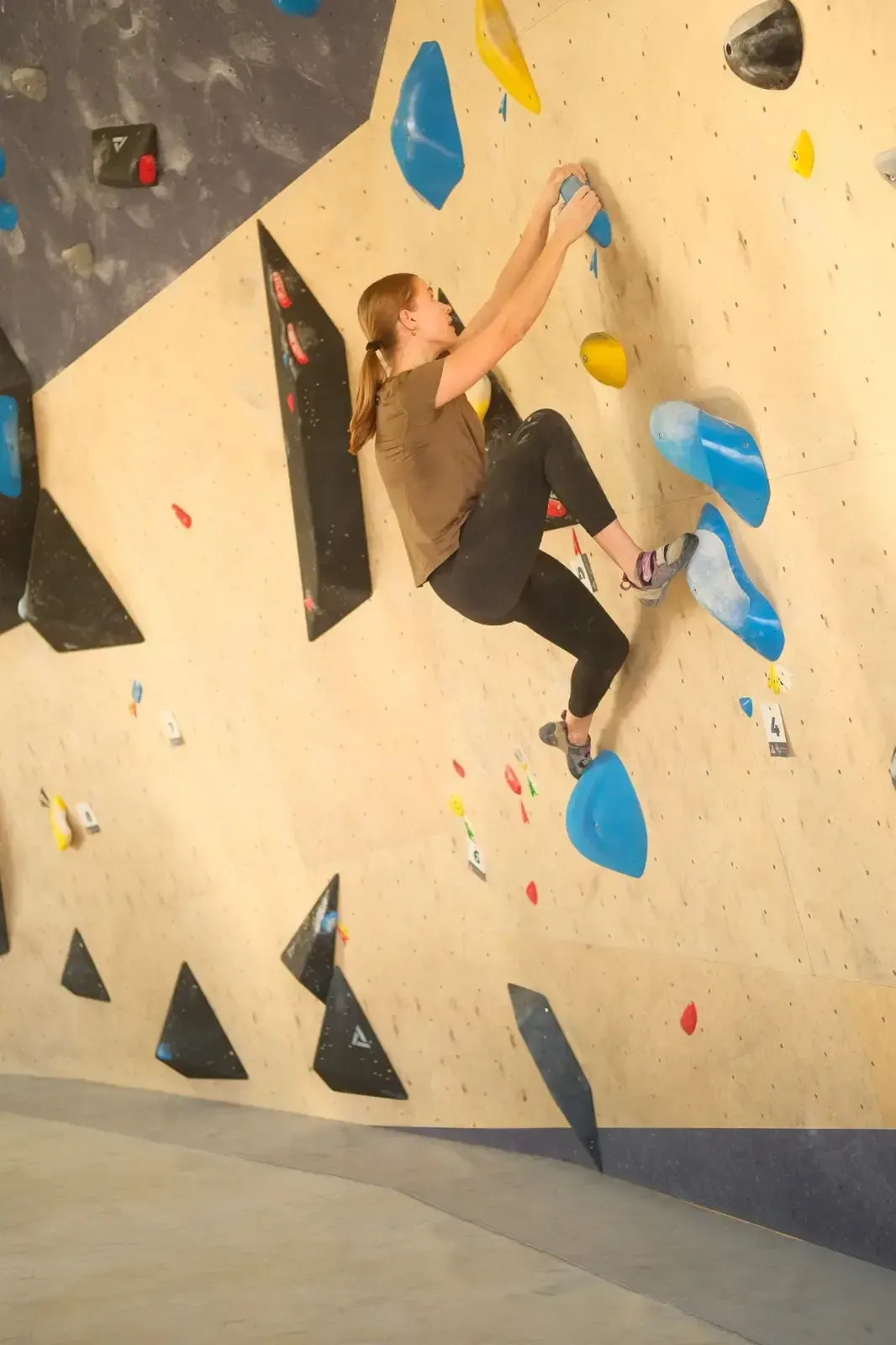
Your first visits to a bouldering gym are often a mix of excitement, uncertainty and a strong urge to progress quickly. That is exactly why beginners in bouldering usually go wrong not because they lack strength, but because they don't yet understand how to bring together technique, movement and the work of the whole body. A boulder problem is rarely solved with the arms alone. A successful attempt needs good hip position, confident footwork, the right use of holds and calm decision-making on the move, especially during your first visits to a bouldering gym.
Relying too much on your arms instead of your legs
One of the most common mistakes in bouldering is climbing “on your arms”. Beginners often see the hold as the main tool, so they put all their attention on grip, forearms and pulling. That approach burns through your strength very quickly and makes every problem feel harder than it really is.
In reality, your legs carry a large share of the load, while your arms mainly help you keep your balance and steer your body. Once a climber learns to stand on their feet precisely and decisively, their movement becomes more economical and progress comes faster.
A good tip for any beginner is to consciously watch where you place your feet as you climb. If a foothold is insecure or half-hearted, your whole body loses stability. In bouldering, it is often good footwork that decides whether an attempt ends in success.
Neglecting body technique
Beginners often think the problem is a lack of strength, when the real cause is poor body position. If your hips are too far from the wall, your body weight pulls you outwards and every hold feels worse than it is. Your arms then have to work harder and the movement becomes imprecise.
Technique is what connects strength and control. Hip position, the direction of your knees, rotating your torso and shifting your weight from one foot to the other make a huge difference. More experienced climbers often look calm precisely because they use their body cleverly, not because they have unlimited strength.
At the start, it helps to adopt one simple rule: bring your hip close to the wall whenever you can. That takes weight off your arms, helps you reach the next hold more easily and gives you a clearer sense of balance.
Climbing too fast without thinking
Many new climbers go into a problem on impulse. They see the problem, set off straight away and try to work everything out on the move. That sometimes works on easier problems, but in more serious bouldering it usually means wasting energy for no reason.
Before you get on the wall, it is worth taking a moment to study the problem. Where are the key holds? Where do you need to change your body position? Where should you pause, settle and shift your weight? This way of thinking isn't reserved for advanced climbers. It matters most for beginners, because it cuts down on aimless attempts.
A good attempt isn't always the one that ends with you topping out, but the one you learn something from. Analysing between attempts often brings more progress than simply repeating the same mistakes.
Skipping the warm-up
Bouldering feels short and explosive, so beginners sometimes jump straight onto a harder problem. That is a common mistake, because without preparation the body copes less well with load, especially in the fingers, shoulders and elbows.
A warm-up doesn't have to be long, but it does have to make sense. You need to prepare your joints, activate your shoulders, wake up your hips and gradually bring in your forearms. A few easier problems, some mobility work and light dynamic movements are often all it takes to get your body ready for more serious effort.
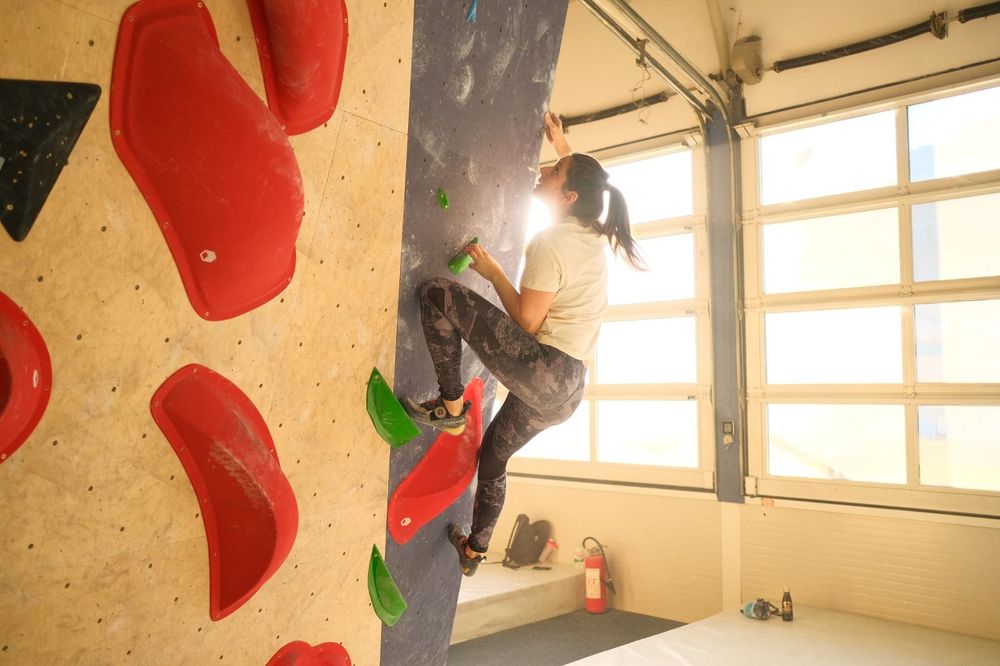
For a beginner, it is especially important to understand that training doesn't start with the first hard climb, but with a proper build-up into the load. That lowers the risk of injury and improves the quality of every attempt that follows.
Misreading holds and the direction of movement
Not every hold is meant to be used the same way. Beginners often see only the shape, not the direction of force the hold calls for. As a result, they squeeze it too hard, grab it from the wrong angle or try to pull where they should actually be pushing.
In bouldering, it is important to learn to “read” a hold. One needs a more open grip, another a precise wrist position, a third good footwork before it becomes usable at all. If a climber doesn't recognise this, the problem feels impossible even though there is a solution.
Less squeezing, more feel is often a better approach than brute force. Once you learn how each hold works, your climbing becomes more confident and more fluid.
Ignoring rest and recovery
Beginners are motivated, which is great, but they often overdo it. More attempts, more problems and longer sessions at the gym don't automatically mean better progress. Without enough rest, the quality of your movement drops, your technique falls apart and your body finds it harder and harder to recover.
Bouldering is an intense sport. Your fingers, shoulders and the whole upper body need time to adapt. That is why it matters to work smart, not just hard. Sometimes the best advice is to stop, rest for a few minutes and try again with more control.
Progress doesn't come from effort alone, but also from being able to recognise when your body needs a break. It is exactly this balance between effort, training and recovery that often separates frustration from real development.
Comparing yourself with others instead of with your own progress
At the gym it is easy to watch a more experienced climber and think everything should be going faster. But every beginner has a different background, level of coordination, feel for movement and relationship with height. Comparing yourself often creates pressure and distracts you from what really matters: your own development.
It is far more useful to track small steps forward. Did you place your foot more confidently today? Did you understand the problem better? Did you manage a move that didn't work last time? Signs like these show real progress in climbing.
Bouldering rewards patience, consistency and attention to detail. Once a beginner accepts that technique, strength and experience come gradually, every session makes more sense, and climbing becomes ever more natural, safe and fun with everything on offer at Boulder Zona.