How to build finger strength without rushing
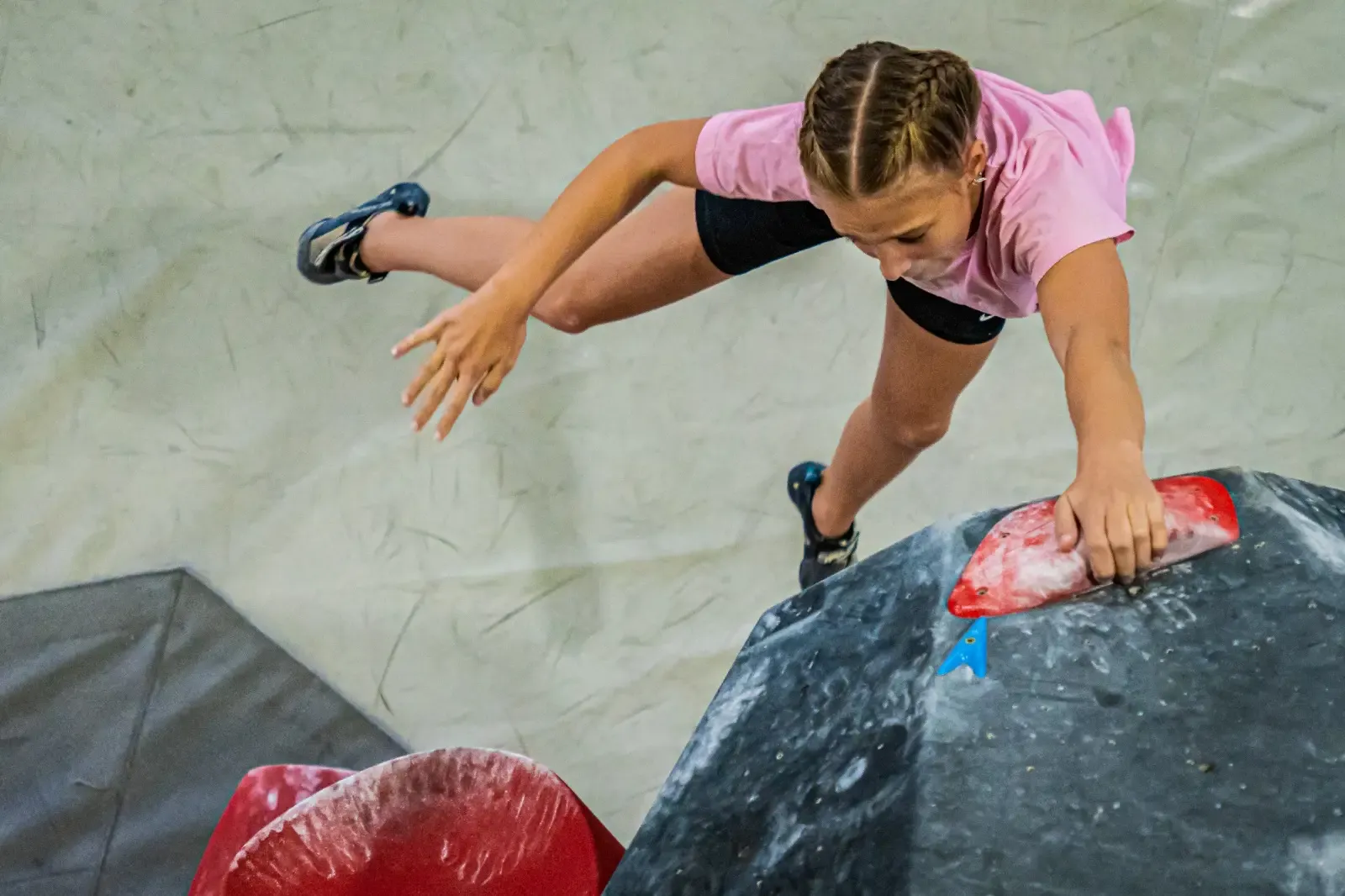
Finger strength in climbing doesn't happen overnight. Your forearm muscles can respond to training fairly quickly, but your tendons and the other structures in your hand need more time to adapt. That's exactly why gradual loading gets better results than regularly training to your absolute limit.
For beginners, the best exercise is usually just climbing. Different holds, controlled moves and good body positioning develop your hands, forearms and technique without any need to bring in max hangs or added weight early on.
Finger strength starts with good body position
Before you load your fingers, you need to understand how your body position affects the force your hand has to take. When your hips are away from the wall, your feet are passive and your upper body is tense, much more of your weight than necessary ends up on your hands.
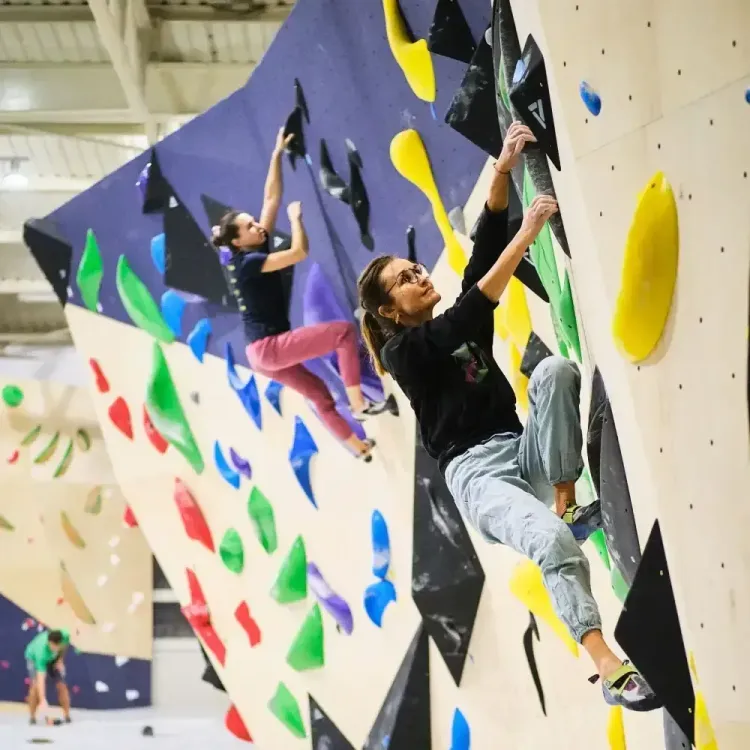
A better way to climb means active legs, precise use of footholds and moving your centre of gravity towards the holds. Your hand is then not just there to pull, but mainly keeps you in contact with the wall. This approach reduces forearm fatigue and lets you repeat moves with better quality.
Wrist position matters too. Your wrist should stay stable, without suddenly bending sideways or collapsing under load. Use your thumb depending on the shape of the hold, but don't add extra pressure with it if the grip doesn't call for it.
Warming up your hands and forearms
Finger training shouldn't start with going straight into a hang on a small edge. First prepare your body with a general warm-up, joint mobility work and easy problems.
A useful warm-up can include:
- opening and closing your hands without squeezing hard
- wrist circles in both directions
- gently activating your forearm muscles
- climbing on big holds
- gradually moving on to more demanding finger positions
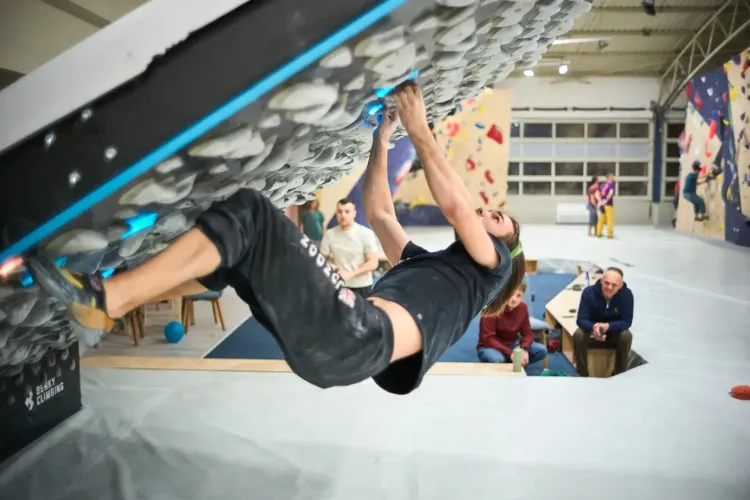
Every movement should be calm and controlled. The goal isn't to tire your hands out, but to get the tissue ready for load. Training on a fingerboard or the Campus Board should be done while you're fresh, because fatigue can break down your technique and increase the risk of injury. The board isn't suitable for anyone under 18.
A simple exercise for gradually strengthening your fingers
If you have enough climbing experience, you can start with an assisted hang on a larger, comfortable edge. In the starting position, both hands are on the hold, your feet are on the floor or a support and your shoulders are slightly engaged. Your elbows aren't completely passive, and your palm stays off the edge.
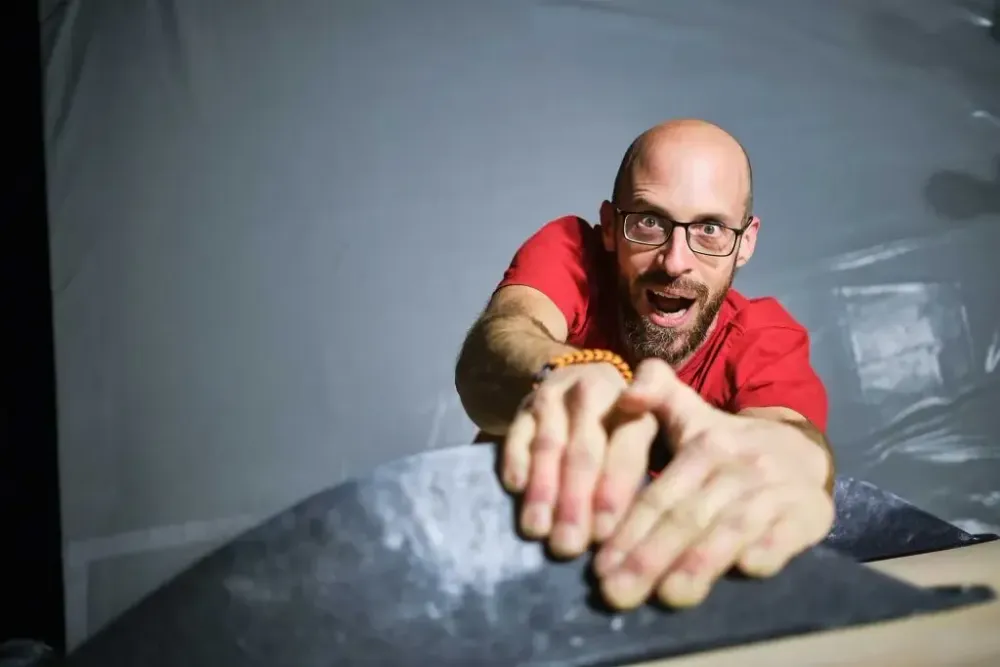
Hang for five to seven seconds, then take a long enough rest. A few good-quality reps make one set. If your hand position changes, your shoulders sag or your fingers start to slip, stop the exercise.
Only increase the load when every rep is technically solid. Progress might mean:
- slightly longer time under load
- less help from your feet
- an extra set
- a slightly smaller hold
- a little added weight for experienced climbers
Don't change several things at once. If you go down to a smaller edge, don't add weight as well. Research shows that frequent lower-intensity loading can also improve grip strength, which is why max hangs aren't the only route to progress. (pubmed.ncbi.nlm.nih.gov)
Open grip before an aggressive closed grip
An open-hand finger position is generally a good foundation for controlled strengthening. An aggressive closed grip, where the finger joints are sharply bent, puts a lot of load on a small area and shouldn't be held unnecessarily in every exercise. Using it a lot is linked to a higher risk of overstrain. (pubmed.ncbi.nlm.nih.gov)
That doesn't mean you should avoid this grip altogether. It's part of climbing and can be useful on some holds, but bring it in gradually, consciously and in limited doses.
Rest is part of training
Your fingers don't get stronger during the set itself, but through the recovery afterwards. There's no point repeating hand-specific training if you still feel deep fatigue, tenderness or reduced control over your movements.
Sharp pain, swelling, tenderness in one part of a finger or pain when you press on it are not normal signs of good training. If that happens, stop loading and, if needed, get it assessed by a health professional.
At Boulder Zona you can build strength through a wide variety of boulder problems, the Spray Wall and specialist training equipment, but each of them has its own purpose. Early progress is often quick, after which you may hit a plateau. At that point you don't necessarily need to train harder, but more precisely: improve your technique, spread out your sets, keep an eye on your recovery and give every finger enough time to adapt.