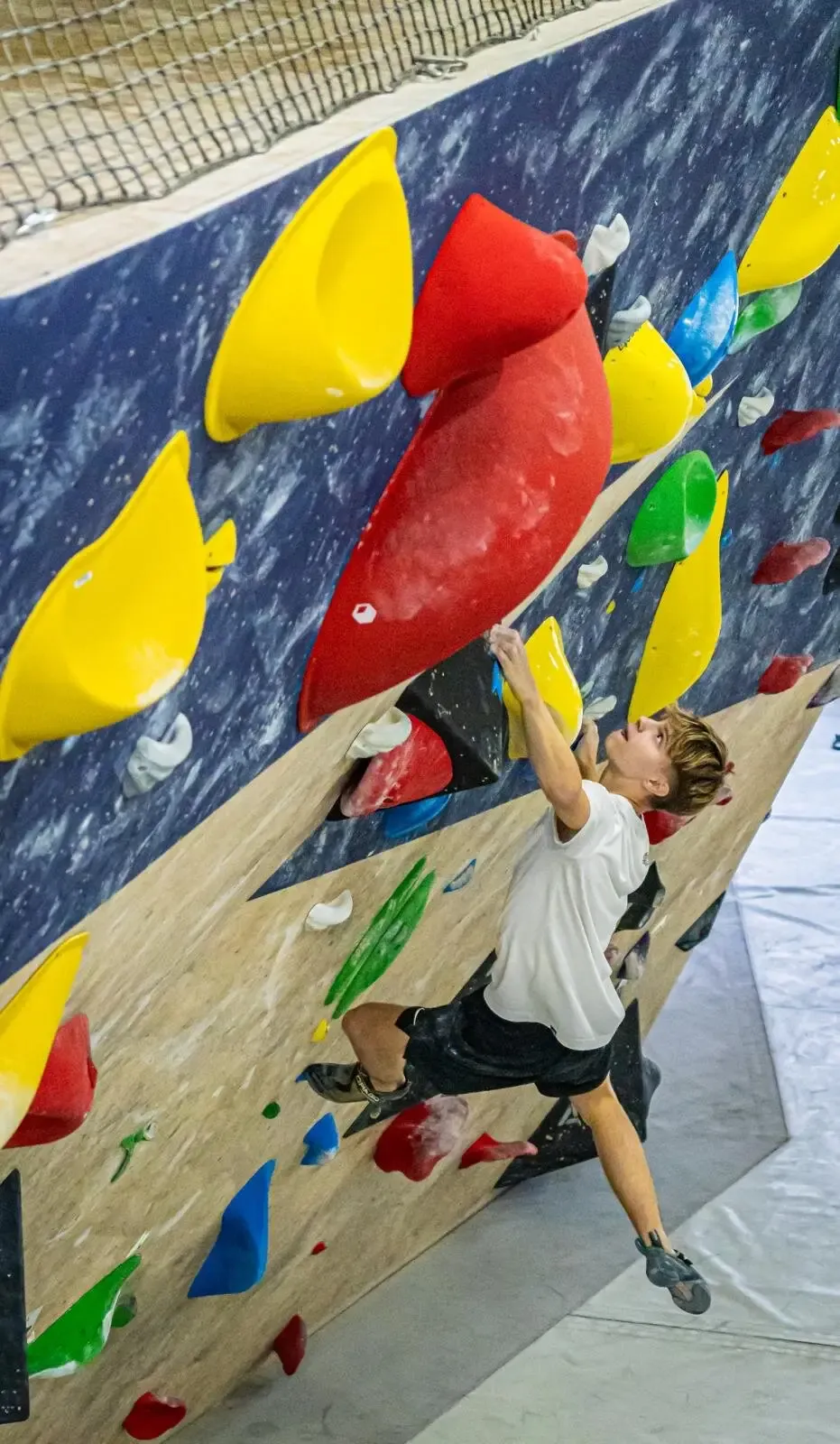
Intro course: how quickly will you see progress
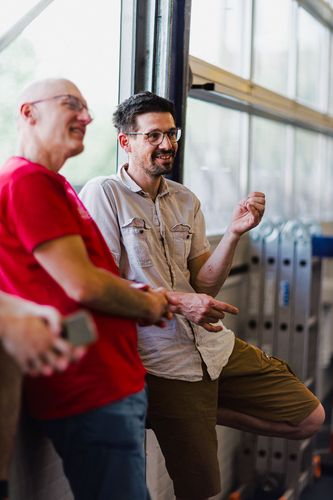
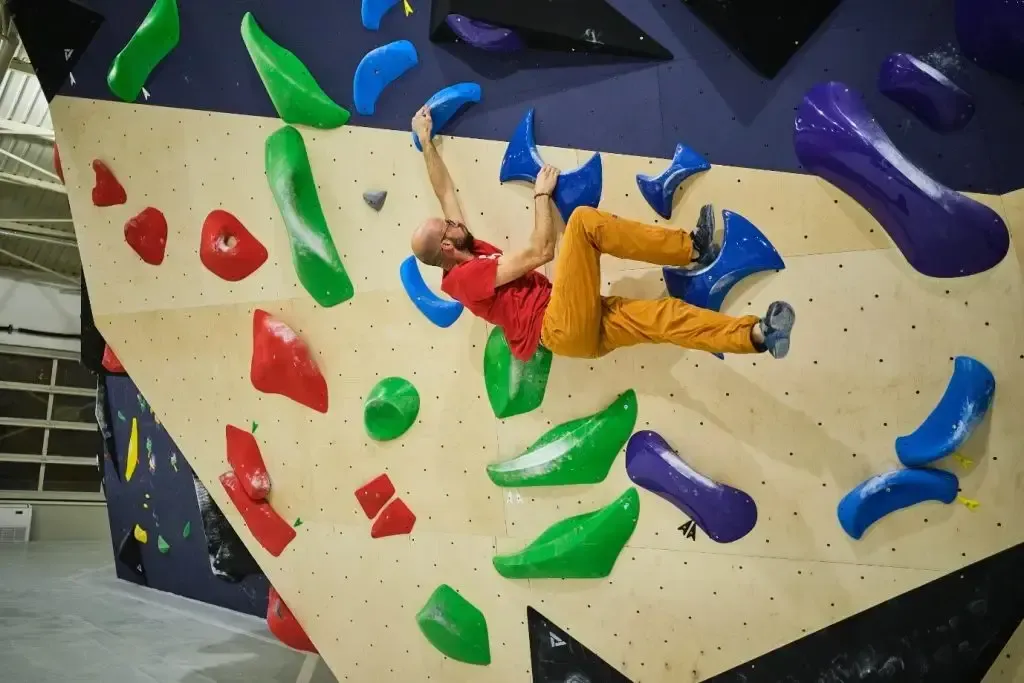
Your first encounter with bouldering often brings surprisingly fast progress. After just a few sessions, beginners start using their feet better, reading problems with more confidence and understanding why arm strength isn't the answer to every problem on the wall. That's exactly why an intro course is the best way to set your climbing off in the right direction from the very start, without needless wandering or picking up bad habits.
Progress isn't measured only by whether you climb a harder grade. In climbing it matters just as much how you move, how efficiently you use your body, how you distribute your strength and how well you understand the problem in front of you. A beginner who learns to stand on their feet with more trust after the first few hours has already taken a big step.
What changes in your first days of learning to climb
At the start, progress is often visible very quickly because your body and mind are taking in a completely new kind of information. You begin to connect movement, balance, grip and hip position. What looked like an impossible problem on day one can become doable after just a few exercises.
In the first sessions, these are the basic skills that usually develop:
- warming up properly and preparing your body for work
- climbing down more safely and controlling your falls
- using your feet instead of pulling with your arms
- basic reading of a problem before you climb it
- understanding balance and body position
- a better feel for holds and footholds
This phase is motivating because you get feedback quickly. Every attempt shows what works and what needs to change. A good coach explains not only what to do, but also why a particular approach gives a better result.
Why a fast start is followed by hitting a wall
After the initial jump in progress, almost every climber reaches a phase where it feels like they're standing still. That's a completely normal part of learning. In every sport, climbing included, the first changes come quickly because you're picking up the basic patterns. Later the limits shift gradually, through more precise work, better technique and a smarter training plan.
That “wall” doesn't mean there's no progress. Often you no longer see big changes from one session to the next, but you're improving in the details: you distribute your weight better, tire less, use your feet more confidently or rest better between attempts. These are important signs that make the difference in the long run, especially when you're stuck at the same level.
In climbing, progress doesn't happen in a straight line. Sometimes you'll send a problem in a single day that's been giving you trouble for weeks, and sometimes you'll spend several sessions working on the same move. Both are part of the same process.
How long it takes to see visible progress
Most beginners feel a difference after their first few visits, especially if they train regularly. After one hour you can understand the basic rules of movement and safety. After a few sessions your movements become more natural, and after a few weeks practice brings a clearer understanding of problems and better management of your strength.
It's realistic to expect that in the first month you'll progress most in technique and confidence. Grades aren't the only measure at that stage. What matters more is building a solid base of knowledge so that further learning is safer and more effective.
If you train once a week, your progress will be gradual but steady. With two to three sessions a week your body remembers movements faster, and practice turns into a habit more easily. The key is to leave enough time between sessions for recovery, because fatigue often slows learning and increases the risk of injury.
How a course helps you avoid getting stuck too early
Climbing on your own can be fun, but as a beginner it's hard to spot your own mistakes. You might think you lack strength when the real problem is your hip position, the wrong sequence of moves or poor use of your feet. That's where expert feedback is crucial.
An intro course gives you a clear learning plan. Instead of trying problems at random, you gradually work through content in a sensible order. First comes safety, then basic technique, followed by reading problems, climbing rhythm and solving specific problems on the wall.
At Boulder Zona, our courses are designed to give beginners structure, but also enough room for play, exploration and figuring out movement for themselves. Bouldering is a physical activity, but also a mental challenge: every problem is a little puzzle your body solves through trial and error.
Progress isn't the same for everyone
The pace of learning depends on experience, coordination, strength, mobility and fear of falling, but also on how open you are to feedback. Someone might quickly master balance but need more time for dynamic moves. Someone else might have good strength but weaker footwork.
That's why comparing yourself with others often gives a false picture. It's better to track your own small steps forward: did you place your foot on a foothold more calmly today, did you spot a better way to move sooner, did you manage to send a problem in fewer attempts? This approach builds solid knowledge and long-term motivation.
From an intro course to bigger goals
Once the basic skills feel secure, your next goal might be moving on to harder problems, better technique or targeted work on your weaknesses. At that point, progress is no longer just a matter of turning up at the gym, but of a good training plan.
That's why Boulder Zona offers climbing courses at several levels, for beginners and for experienced climbers. Someone who wants to go from 6a to 6b needs focused work just as much as someone who wants to go from 7a to 7b. The difference is in the details, the intensity and the type of exercises, but the principle stays the same: progress comes through understanding, practice and patiently pushing your limits.
Climbing rewards those who learn to observe their own movement. When your initial enthusiasm meets that first wall, the real value of a course becomes even clearer: you're not left alone with the problem, but given the tools, the method and a clearer path to your next goal.
Art Rock League, round 3
How to progress when you're stuck at the same level

Team building in Zagreb: bring your team together through bouldering challenges