What if I'm not strong enough for bouldering?
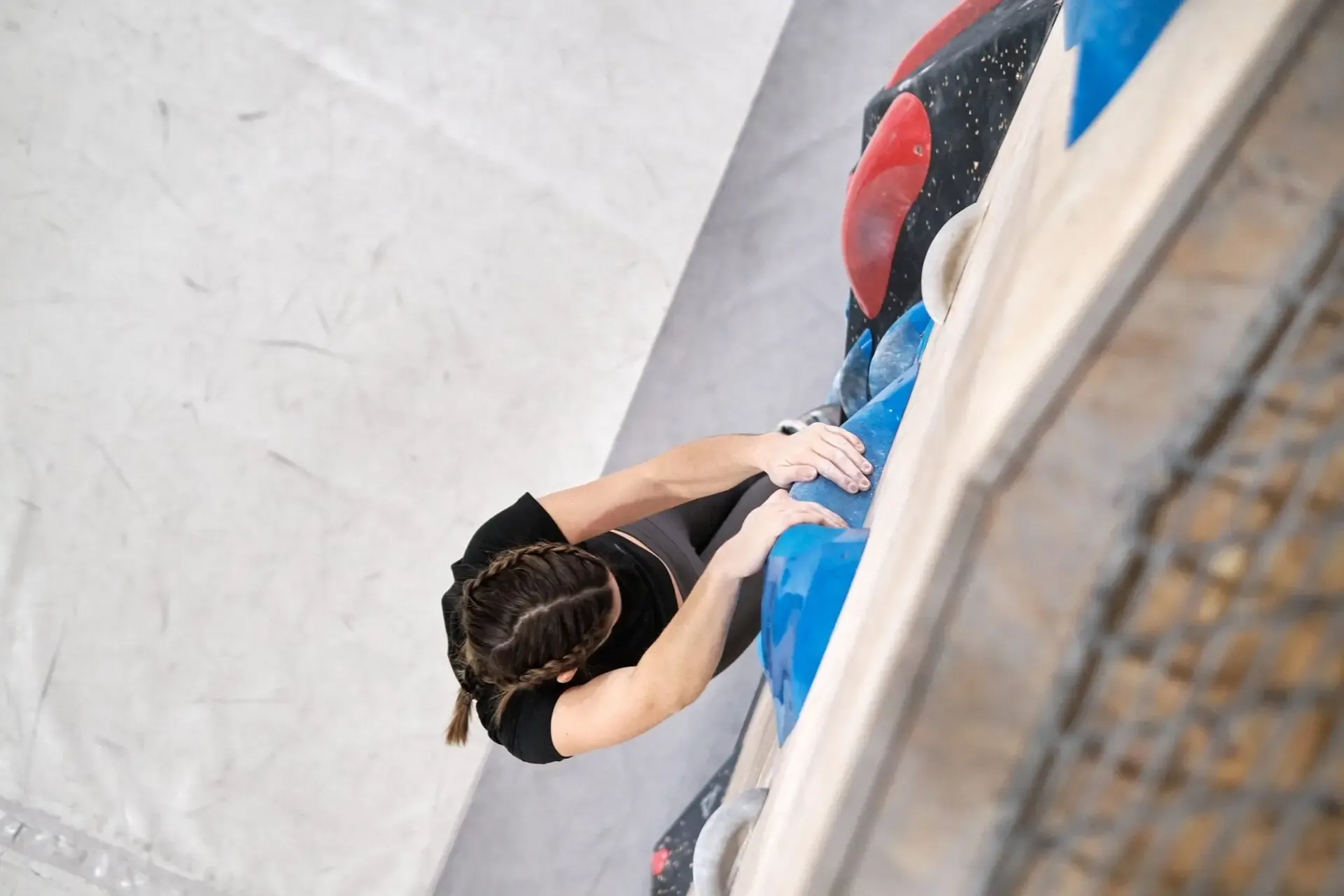
You watch someone climbing an overhang and think: “I can't even do a single pull-up. How could I ever do this?” That's completely understandable. From the outside, bouldering often looks like a sport where strong arms do all the work. But what's harder to see is precise foot placement, balance and well-timed moves.
You don't need to be able to do a pull-up to start bouldering. Strength helps, but it isn't your ticket into the gym. To begin with, it's more important to choose a suitable problem, learn the basic technique and give yourself time to learn.
Bouldering isn't just pulling with your arms
Bouldering is climbing short problems without a rope, above mats that cushion your landing. A climb is often called a boulder problem because you don't reach the top through physical effort alone: you need to work out how to link the moves.
Beginners often try to haul their whole body up with their arms, while their legs stay almost passive. That way your forearms tire quickly, and the next hold suddenly seems out of reach. It's easy to get the impression that you lack strength, even though a different foot position could make the move much easier.
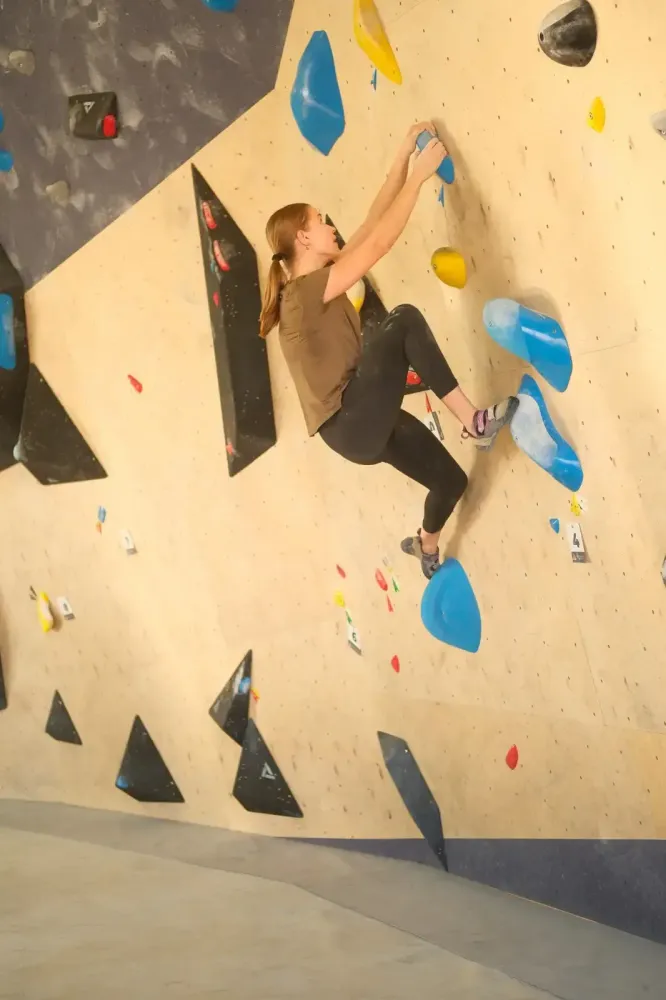
Your legs carry and push your body, while your arms help you hold your position and guide your movement. How much work each part of your body does depends on the angle of the wall and the problem itself, but the goal isn't to muscle every move with your arms.
What does a beginner-friendly problem look like?
The gym has problems of varying difficulty. For your first attempts, the more approachable ones usually have bigger, more comfortable holds, a clear sequence of moves and footholds you can stand on securely.
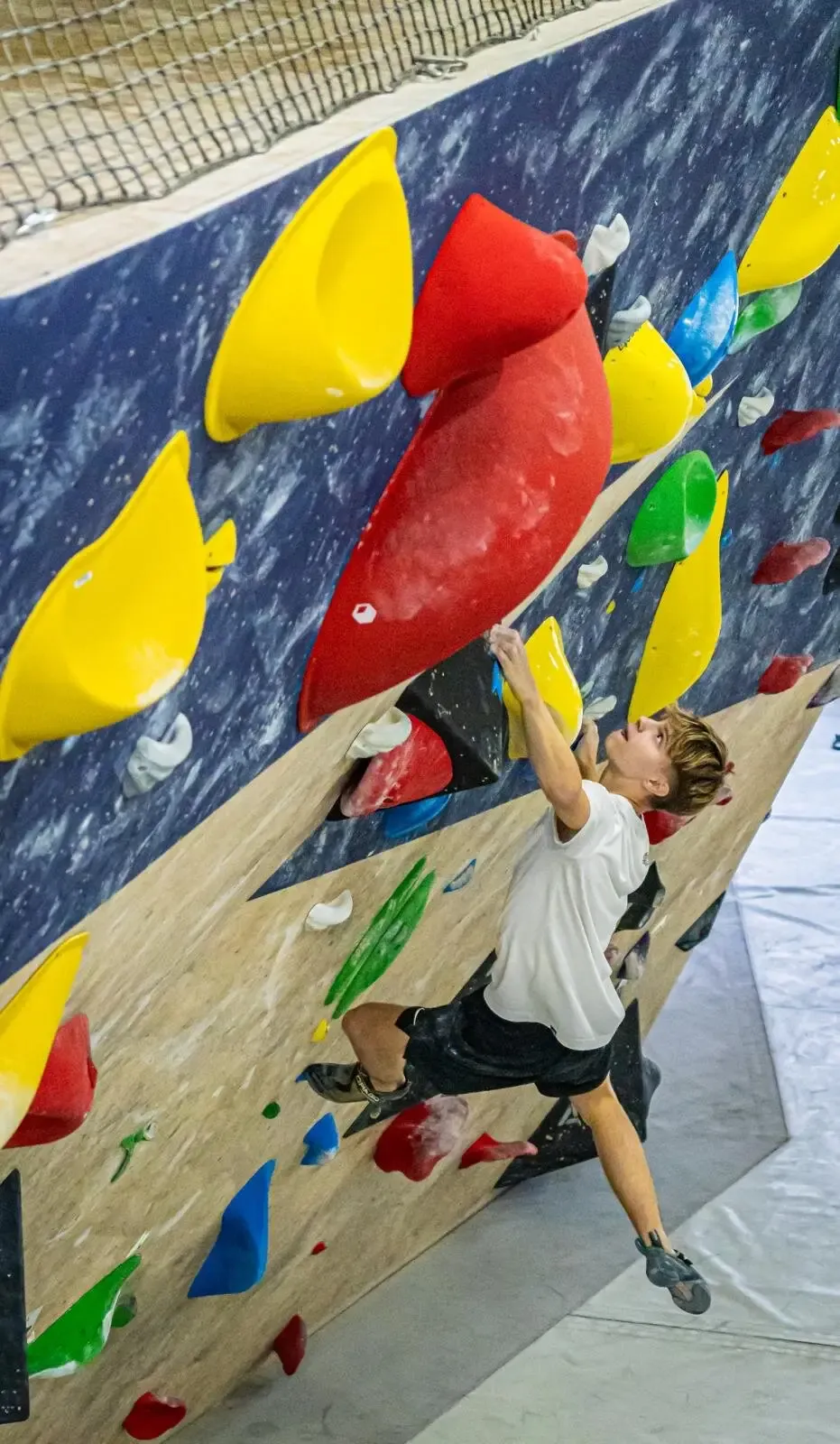
The angle also changes the experience. On a vertical or slightly slabby wall you can get used to standing on your feet and shifting your weight, while an overhang often demands more work from your upper body.
Don't judge difficulty just by how short a problem looks. The distance between holds, their shape and the position of the footholds can completely change how hard the climbing is. If the difficulty markings aren't clear to you, the staff or an instructor can help you choose.
A good beginner problem gives you the chance to try a few moves and learn something. You don't have to finish it on your first attempt for it to be useful.
Technique that makes your first moves easier
When you get stuck, it's worth changing one detail before your next attempt. Sometimes a few centimetres in your foot position make a bigger difference than pulling harder.
Look where you're putting your foot
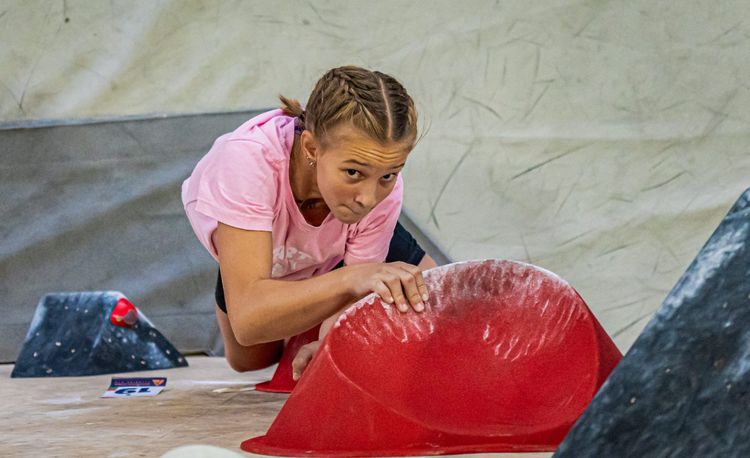
Place your foot deliberately rather than feeling around blindly for a foothold. Standing on the front of your climbing shoe often lets you move and pivot more precisely than standing on the middle of your foot.
Before you reach with your hand, check whether you can push yourself up with your legs first. The next hold may then be much closer.
Experiment with your hip position
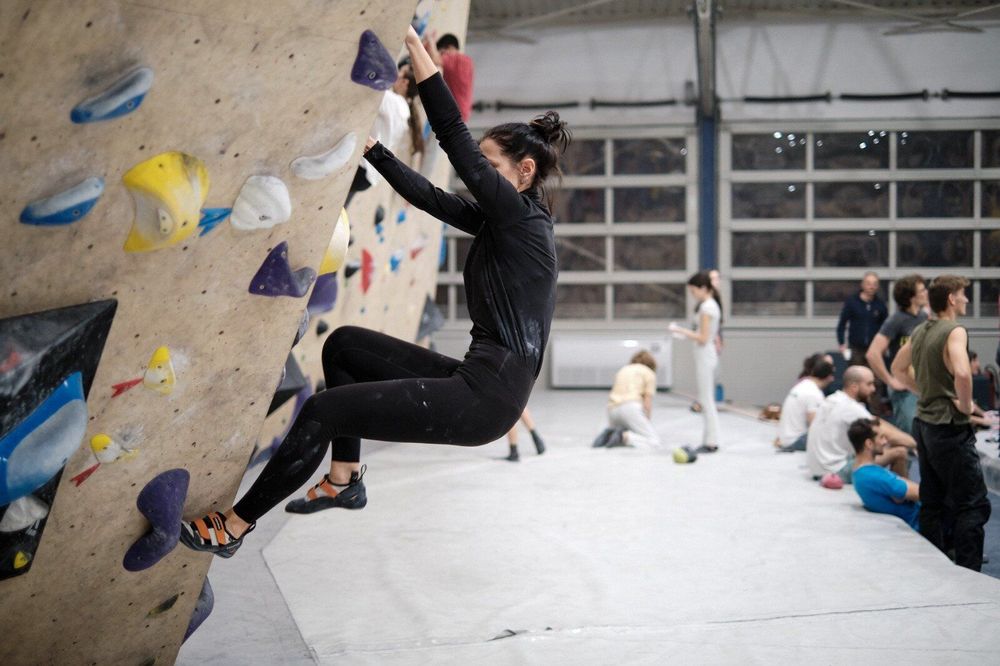
If your hips stay needlessly far from the wall, your arms may end up taking more of the load. Moving closer to the wall or turning one hip towards it often makes it easier to hold a position.
There's no single position for every problem. Trying out different solutions is a big part of learning to climb.
Don't squeeze every hold as hard as you can
Beginner nerves often mean constantly bent arms and a very tight grip. When the position allows, try to release any unnecessary tension and hang on straighter arms. Breathe as you move and pause wherever you have a stable stance.
Should I train strength first?
You don't need to complete a gym preparation programme before your first visit. Climbing suitable problems is already a chance to build strength, coordination and body control.
Extra training can have its place, but as a beginner it's useful to get to know how to move on the wall first. That makes it easier to recognise what's stopping you: fatigue, an insecure stance, an unclear sequence or a move you haven't learned yet.
Start your first visit by getting to know the gym rules, warming up and learning how to climb down and land safely. Take enough rest between attempts so you can do the next move carefully. The quality of your attempts matters more than how many you make.
What if my progress stalls?
Early progress can be quick. You use your legs better, squeeze the holds less and suddenly you're finishing a problem that used to seem impossible. After that, a plateau often follows, a period when the difficulty of the problems you can climb stays the same for a while.
That isn't automatically a sign that you need more strength. You might need to try a different climbing style, improve your balance or learn to link moves more efficiently.
Boulder Zona offers several levels of courses for beginners and experienced climbers, including those who want to push their grade, for example from 6a to 6b or from 7a to 7b. With an instructor, it's easier to spot details you might miss on your own.
Progress shows even before a new grade: you place your foot without adjusting it, you climb the same problem with less fatigue, or you finally understand a move that used to puzzle you. The same holds stay on the wall, but the way you move between them becomes more confident and precise.