Can I start bouldering if I've never climbed before?
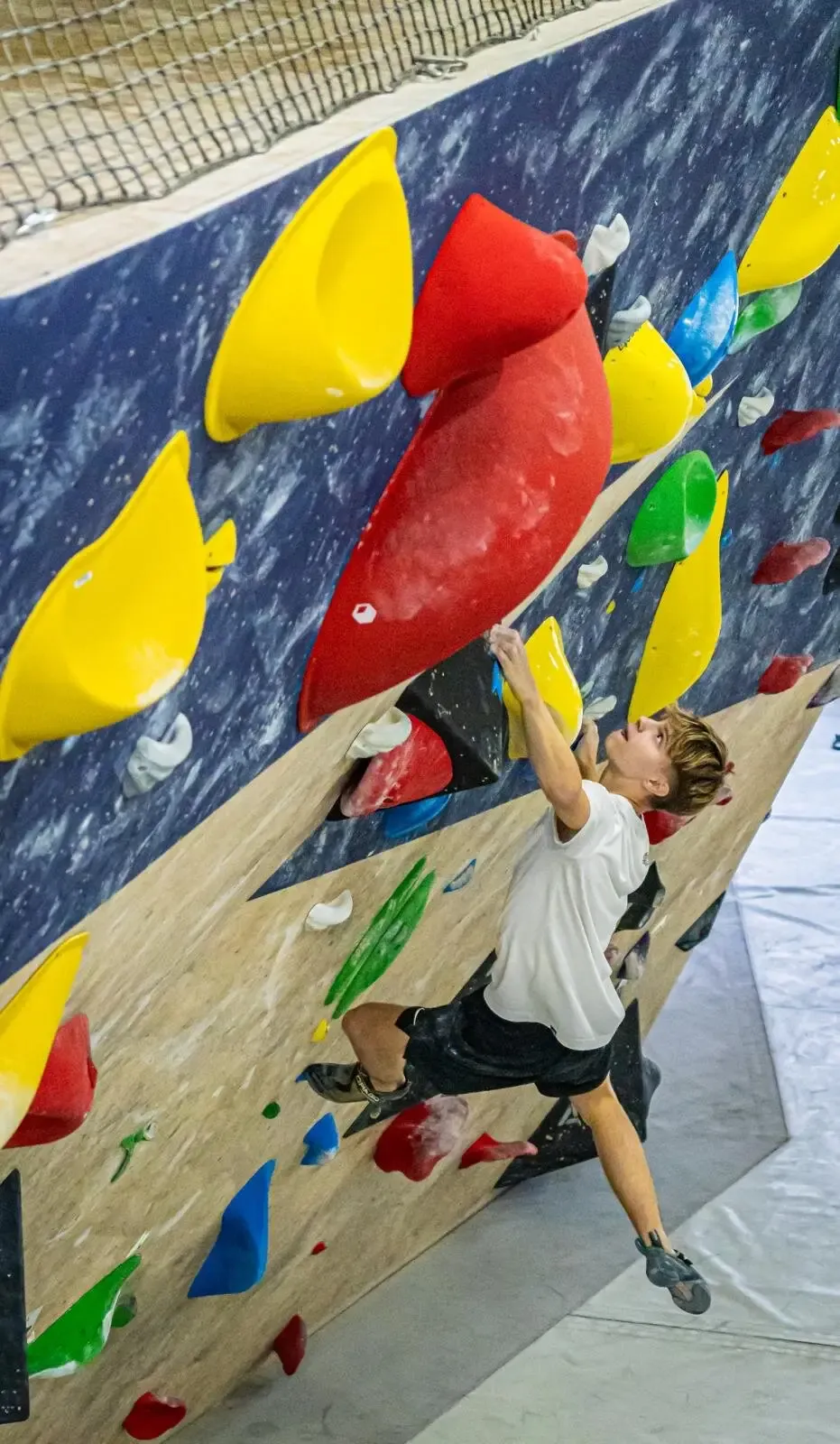
Yes. Bouldering is accessible even to complete beginners: you don't need any previous climbing experience, exceptional strength or knowledge of the gear to try your first problems. In the gym, you climb on an artificial wall without a rope, at a height suited to the discipline, with mats underneath the wall.
Your first visit isn't a test of how strong you are. It's a chance to get to know how to move on the wall, discover how your body keeps its balance and see whether you enjoy solving short climbing challenges.
What is your first visit to a bouldering gym like?
To start with, all you need is comfortable sportswear and climbing shoes. Before you come, check whether you can hire shoes at the gym or need to bring your own. It's also a good idea to find out how the beginner problems are marked and to ask the staff to explain the basic rules of the space.
A problem is a set of marked holds and footholds that lead you from the start to the finish of the climb. Some are simple and let you focus on the basic moves. There's no need to jump straight onto a harder problem just because it looks interesting: an easier problem can teach you more about balance and footwork.
Before each attempt, look at where the start and finish are and check that the area under the wall is clear. Other climbers are training in the gym at the same time, so it's important not to walk under someone who is climbing and not to start a problem that crosses theirs.
Do I need to build up my arm strength first?
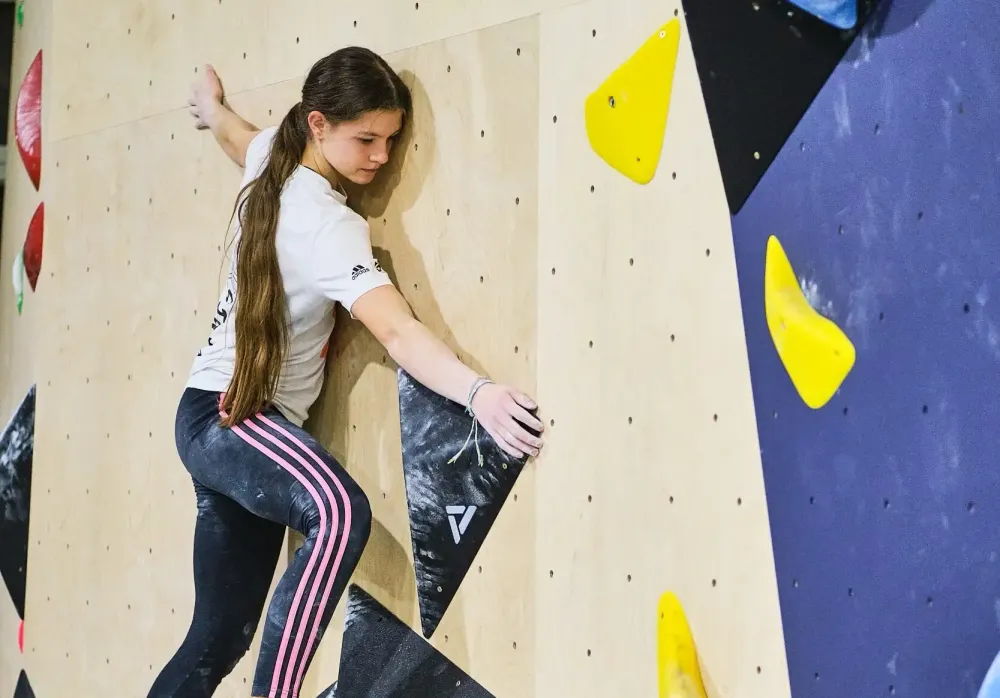
You don't have to. Beginners often think climbing is a sport where the arms do all the work, but good foot placement and hip movement are often more important than pulling hard. When you shift your weight onto your legs, your arms tire less and it's easier to control the next move.
In your first sessions, try to place your feet calmly on the footholds and notice where your centre of gravity is going. Sometimes a small shift of your hip towards the wall will help more than trying to reach a distant hold with your hand. It's not unusual to fail on a problem at first; trying out different ways of moving is part of what bouldering is about.
Strength develops over time, but there's no need to rush. A short warm-up and breaks between attempts help you climb with focus, instead of trying to force your way through every problem.
What do I need to know about falling?
Falling is a normal part of bouldering, so learn the basic safety rules before you climb for the first time. Check that the landing area is clear and, when climbing down, use the holds where possible to get closer to the mat. If you fall, don't try to break your fall with an outstretched arm.
The gym staff can show you how to climb down in a controlled way and how to land. Start with easier problems, take your time and keep an eye on the people around you. Confidence usually grows with experience, not by throwing yourself straight into moves you're uncomfortable with.
Is it better to start on my own or with a course?
Either works. Coming on your own suits you if you want to try climbing in a relaxed way and get to know the gym at your own pace. An intro course is useful if you want someone to explain technique, safety rules and how to read problems from the very beginning, and help you spot what you can change in the way you move.
Boulder Zona in Zagreb offers beginner and advanced courses for adults, so there's room to keep learning after your first successful problems. Early progress is often quick: moves that seemed impossible on your first day soon become familiar. Later on, progress may slow down or stall for a while, which is a normal part of learning. That's when guided training can help you recognise what's holding you back, whether it's technique, planning your moves or strength.
For your first time, though, you don't have to think about grades or a long-term training plan. Pick a beginner problem, look at where you'll place your feet and take it one move at a time.
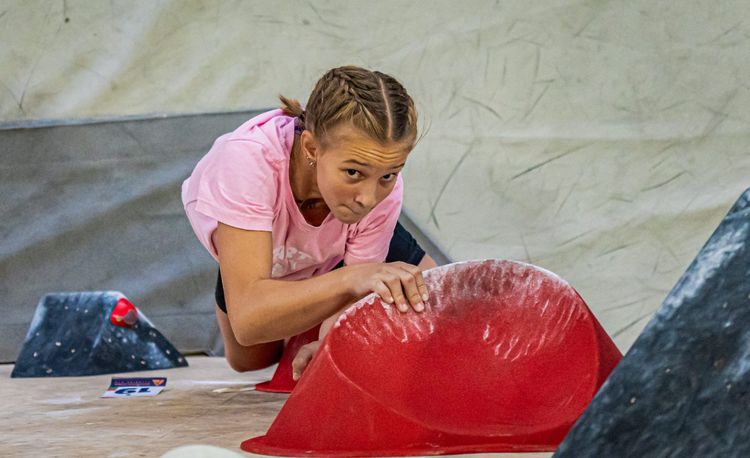
Art Rock League, round 3
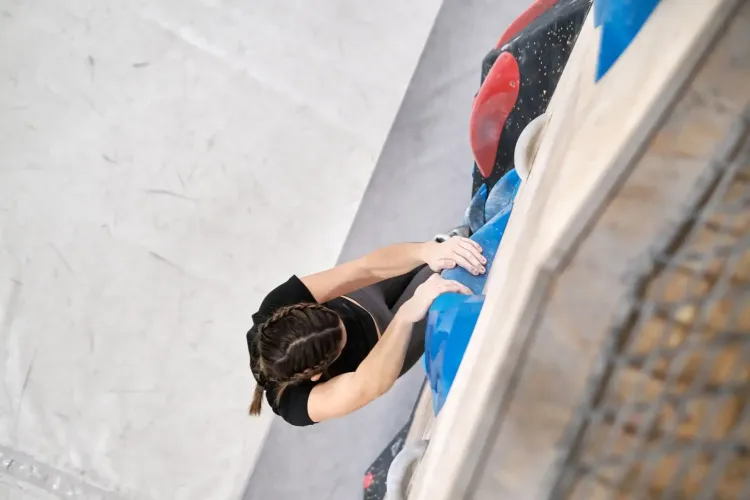
What if I'm not strong enough for bouldering?

Team building in Zagreb: bring your team together through bouldering challenges