How to choose the right type of coached bouldering training for your goal
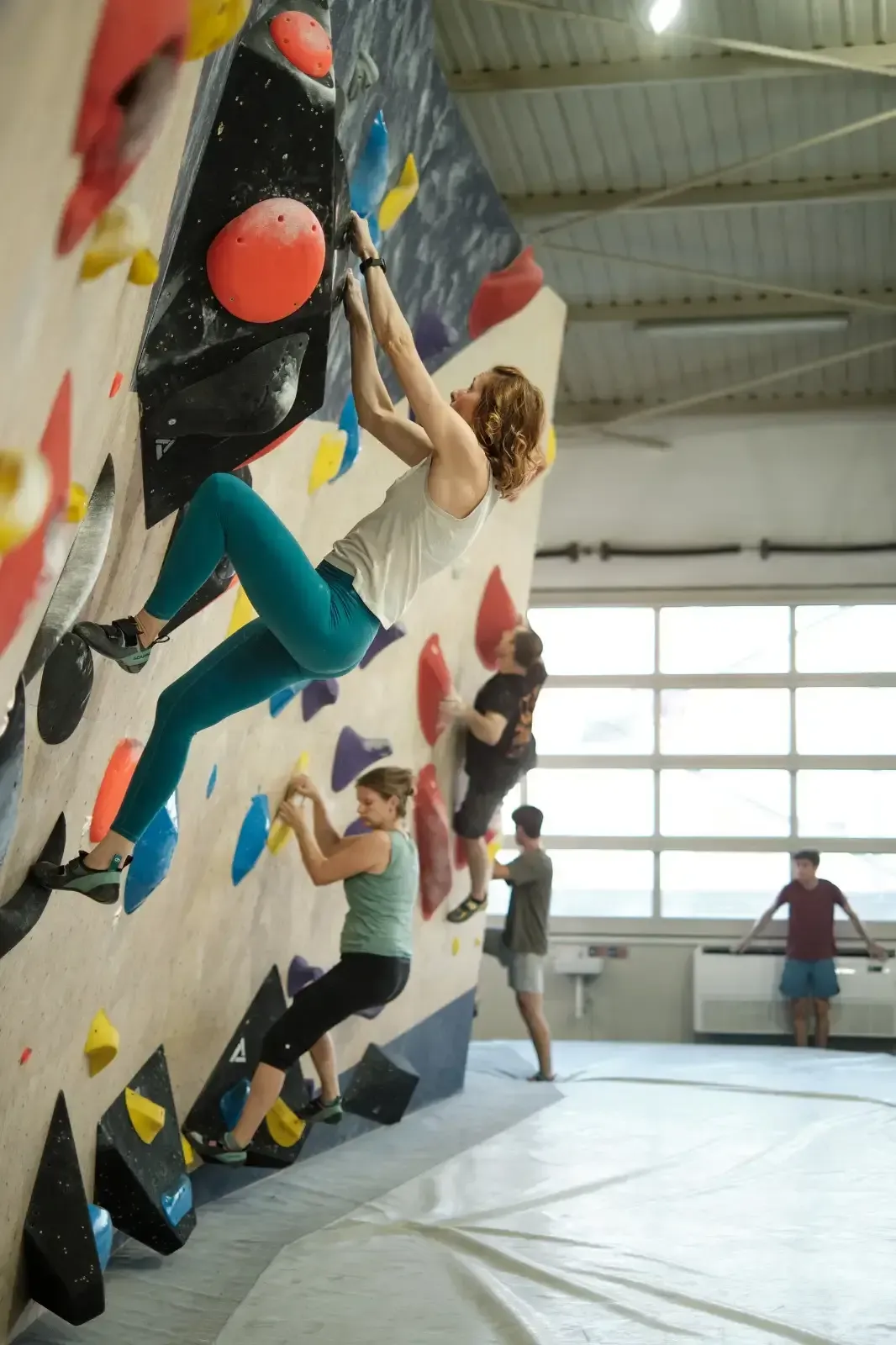
A bouldering course “pays off” fastest when it matches your goal and your real level on the rock (or in the gym). If you want more power for dynamic moves, you need a different programme from someone returning after a break, working on slab technique or preparing for a competition. Just as important: training is always better in a group, but only if the group suits your level of climbing. In the right group you get the pace, tasks and comparable “attempts” that push you forward, rather than frustrating you or holding you back.
Start with your goal, but turn it into a measurable plan
When you say “I want to improve”, that isn't precise enough for a coach. Try turning your goal into something concrete:
- you want to climb harder in a particular style (slab, overhang, coordination)
- you want finger strength and shoulder girdle stability
- you want better technique: hip positioning, footwork, body control
- you want to increase your training volume without losing quality
- you're preparing for a competition (specific sets of problems, attempts under pressure)
A good bouldering course is one that breaks your goal down into weekly focus blocks: what you do, how often, at what intensity and how you measure progress.
Why the group is key (and why it has to be “your” level)
In bouldering, climbing with stronger, weaker or equally strong climbers is not the same thing. In an ideal group:
- the problems and tasks are hard enough to demand focus, but not so hard that it all comes down to failed attempts
- you get feedback from both the coach and the group, which corrects your technique faster
- the pace is even, so it's easier to get through the planned session (warm-up, main part, extras)
At Boulder Zona this is exactly where the advantage of coached programmes shows: when you're in a group that matches your level, the coach can dose the load more precisely and choose tasks that make sense for your current capacity.
If you're a beginner: look for a course that builds technique and habits
For a beginner, the best course is one that doesn't skip the fundamentals. “Strength” comes quickly and on its own, but technique and habits stay with you for the long term. A beginners' course should usually focus on:
- a proper warm-up and a basic training plan
- footwork, balance, hip position and body control
- learning how to read a boulder and plan your attempt
- gradually increasing volume without excessive fatigue
If you're new, avoid programmes that throw you straight into maximal attempts or aggressive finger training. At the start, it's more important to lay a solid foundation and understand how to train.
If you want strength and explosiveness: look for structured training, not “just harder problems”
When your goal is strength, especially for overhangs and dynamic moves, you need a bouldering course with a clear method: intensity, rest, number of sets and progression. Well-coached strength training often combines:
- specific boulder sets (limit attempts with enough rest)
- extra exercises for the core and stabilisers (shoulders, shoulder blades)
- controlled volume so you avoid overtraining
The advantage of a gym like Boulder Zona is that it has specialised zones and equipment (e.g. boards and structures for targeted movements), so the coach can direct your work precisely without improvising.
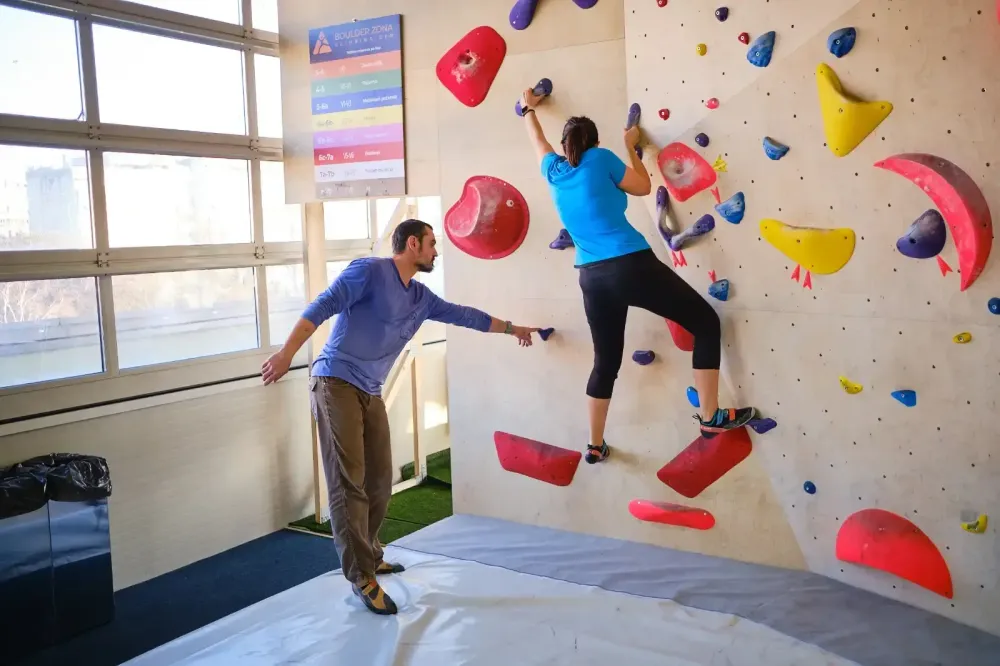
If your goal is technique: choose a programme with analysis and clear tasks
Technique isn't a case of “climb more and it'll come”. It builds fastest when the coach gives you concrete tasks: how to place your foot, where to turn your knee, how to use friction, how to breathe and keep tension. A technique-focused course should include:
- real-time movement correction
- tasks that limit “cheating” (e.g. only quiet feet, controlled finishes)
- learning how to rest effectively between attempts
If you often feel strong enough but “don't know how”, that's a sign you need a programme with an emphasis on technique, not necessarily harder problems.
If you're returning after a break or have an injury: the goal is a smart comeback
Coming back after a break or a minor injury calls for a course that understands load management. You're not chasing grades, you're looking for gradual progress…. without making things worse. A good return programme includes:
- gradually increasing load and volume
- a focus on stability, mobility and movement control
- avoiding risky situations (e.g. sudden maximal attempts, fingerboard training)
If you have trouble with a finger, elbow or shoulder, say so before you start. The coach can then adapt the plan, choose grips and tasks, and guide you through a progression that makes sense.
If you're aiming to compete: look for pressure simulation and work on attempt strategy
For competitions, “being strong” isn't enough. You need to know how to manage your energy, attempts and time, and how to adapt quickly to new problems. A competition programme usually includes:
- specific sets that mirror qualification rounds
- work on an “on-sight” approach and reading boulders quickly
- stress control and a pre-attempt routine
- balancing strength, technique and recovery across the week
This is where group training is especially useful, because it creates real dynamics: you watch others, learn from their solutions and get used to a rhythm that resembles a competition.
How to recognise the right course in practice
You'll feel that you've chosen the right bouldering course after just a few sessions: your focus is clearer, you know what you're doing and why, and your fatigue is “constructive”, not chaotic. Ask yourself three quick questions:
- Is the group at a level where I can complete most of the tasks properly?
- Is the programme aligned with my goal (strength, technique, comeback, competition)?
- Am I getting concrete instructions from the coach that I can repeat next time too?
At Boulder Zona, the advantage is that you have the space, structures and equipment for different training styles all in one place, so the course can be adapted to your level and wishes without compromise: from a beginner's very first steps to targeted training for progress, a comeback after a break or a competition focus.
Art Rock League, round 3
Team building in Zagreb: bring your team together through bouldering challenges
What do I need to know before my first visit to Boulder Zona?