Kilter Board: why it's so addictive
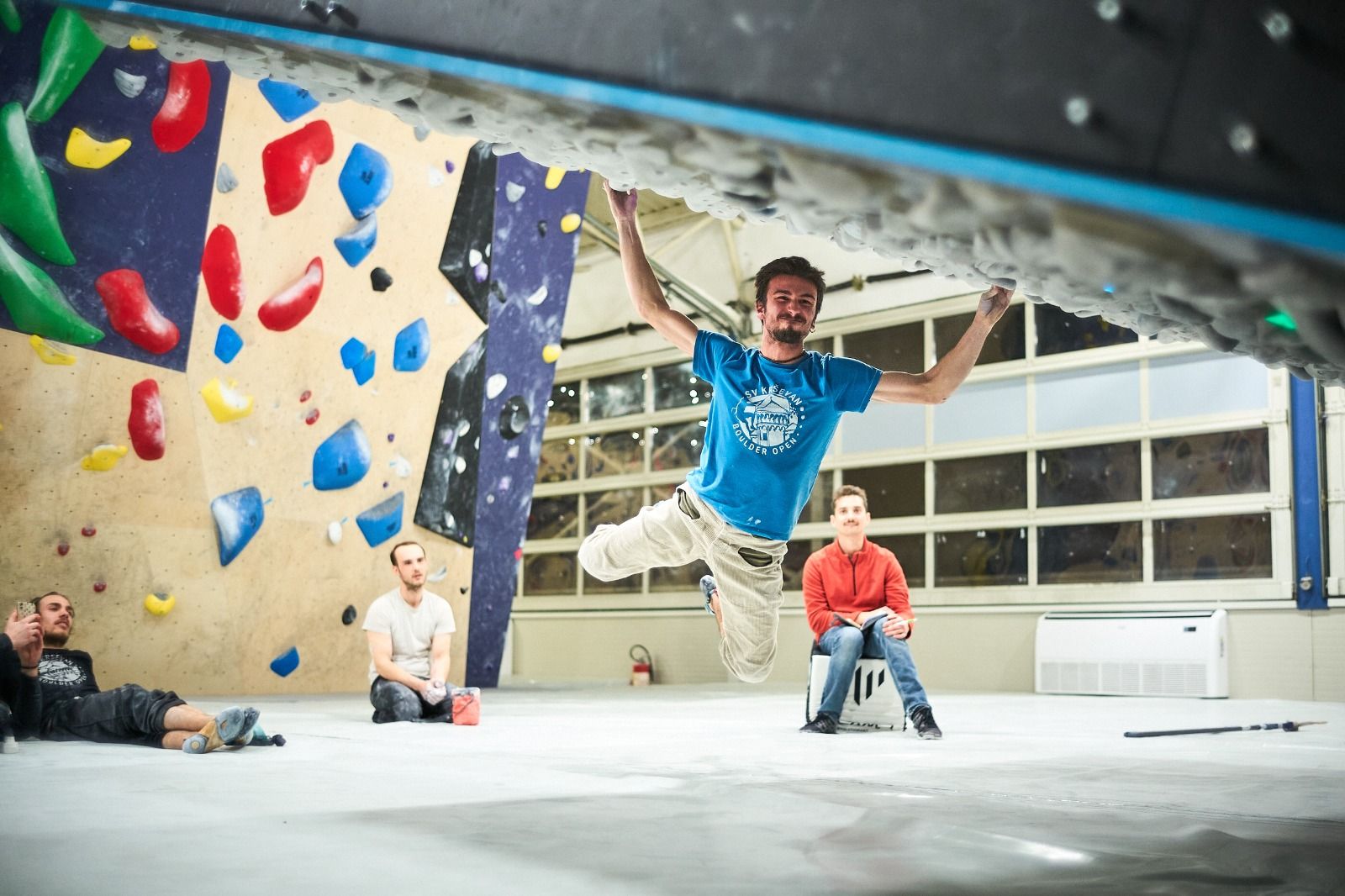
The Kilter Board hooks climbers almost instantly because it combines play, training and measurable progress in a single system. It isn't just another climbing wall in the gym, but a tool that gives every attempt a clear purpose. Once you feel the mix of powerful moves, precise body work and the chance to instantly find a new problem pitched at your own level, it's easy to understand why climbers keep coming back to it.
What exactly is the Kilter Board
The Kilter Board is an interactive climbing board with illuminated holds and a huge database of problems at different grades. It's connected to an app, so you can pick a problem, see which holds light up and get straight on it. That simplicity cuts out a lot of dead time between having an idea and actually climbing.
Unlike regular problems, which depend on when the gym resets its walls, here the choice is almost instant. In a few seconds you can find a new challenge for strength, technique or power. That's why the Kilter Board is especially appealing to anyone who likes structured training, but also to those who simply want some good climbing after work or school.
The sense of progress comes quickly
One of the main reasons the Kilter Board is so addictive is that you can see your own progress very clearly. On real rock or in a regular gym it can sometimes be hard to tell whether you're better than you were a month ago. On the board, everything is more measurable.
You can repeat the same problem, track how many attempts you need and compare your results over time. This way of training suits people who love the feeling of getting better. Every new send, even a seemingly small one, gives you a strong reason to have another go.
In sports where progress is slow, moments like these are crucial. Climbing is demanding because it calls for your whole body, good coordination and mental presence. When a tool like the Kilter Board makes that progress visible, training becomes emotionally rewarding.
The mix of strength and technique is what gets you hooked
At first glance it might seem that the Kilter Board is meant only for strong climbers. It's true that it builds strength in your arms, fingers, shoulders and core, but its appeal isn't just about physical effort. What makes it special is the constant balance between raw power and smart movement.
Many problems call for precise hip positioning, foot control and good timing. If you try to get up a problem on brute force alone, you'll often get stuck fast. That's why, over time, you learn to use your body more efficiently, distribute your weight and find a better way to move.
It's exactly this mix that creates that familiar feeling: the problem seems impossible, then you start to understand it, and in the end you send it with a clean move. The process is hugely satisfying and keeps you coming back for more.
Every attempt drains your energy but sharpens your focus
The Kilter Board demands your full presence. While you're on it, it's hard to think about anything else. Your arms are working flat out, your core stabilises every move and your feet have to stay precise under load. This kind of training never feels monotonous, because every problem raises a new question.
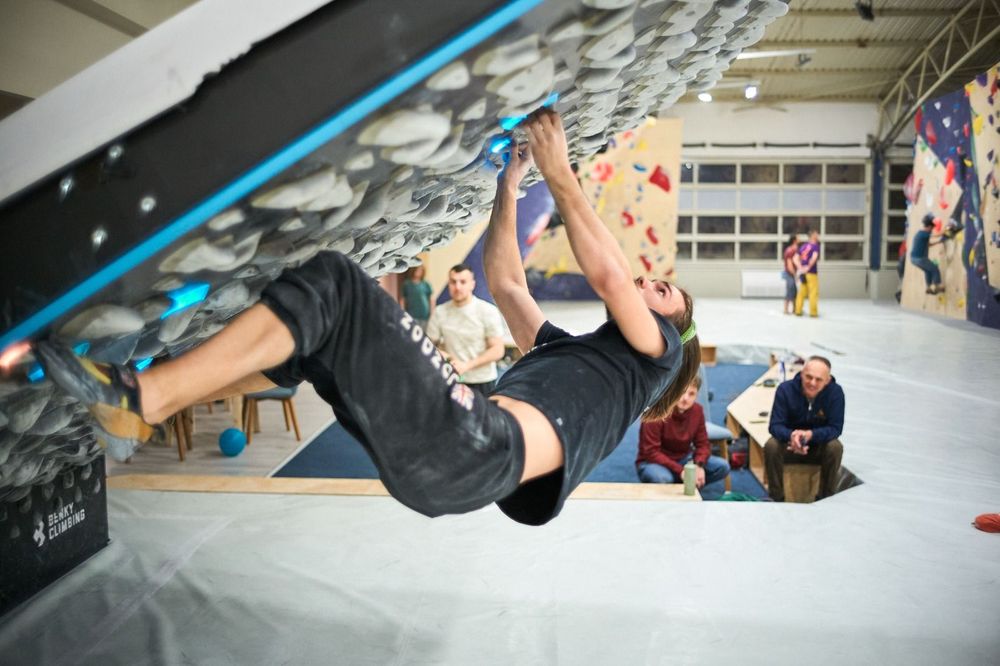
Will shoulder position make the difference? Should you go dynamic or stay controlled? Can you shift your weight earlier? That constant interplay between physical effort and problem solving is what makes bouldering so appealing, and the Kilter Board amplifies that feeling even further.
That's why many climbers feel tired after a session, but mentally lighter. It's not just a sport, but also a way of actively stepping away from everyday life.
The digital element boosts motivation
The app and the illuminated holds bring something a regular climbing wall doesn't offer to the same extent: instant personalisation. You can pick problems by grade, style, angle or your own goals. If you want to work on power, you look for one type of problem. If you want to build control and full-body tension, you choose another.
That flexibility saves time and makes training more effective. Instead of wandering round the gym looking for something to climb that day, you get straight down to it. For busy people that's a big advantage, especially if you already have some experience with guided climbing training.
On top of that, the digital system sparks a gentle competitive urge. Not necessarily against others, but against your own limits. One more problem. One more, better attempt. One more day when you feel stronger than before.
It suits both experienced climbers and ambitious recreational ones
Although it's often linked with advanced climbers, the Kilter Board isn't reserved for the elite. Its value lies in the fact that it can be used in different ways. For an experienced climber it's a tool for specific strength and contact training. For a recreational climber it can be a great way to get to know a more intense style of climbing and build confidence in movement.
The only thing that matters is to approach it wisely. A proper warm-up, gradually increasing the difficulty and keeping the load under control are key to making your training worthwhile. It's easy to overdo it on the board because it's fun, dynamic and always offers a new challenge, especially if you don't know the common beginner mistakes.
That's exactly why so many people say it's addictive. Not because it's easy, but because it constantly gives you the feeling that the next attempt might be the one. That's where its strength lies: in the combination of a modern tool, a pure sporting challenge and a very immediate sense of progress that brings you back to the wall day after day.
Art Rock League, round 3
The most common beginner mistakes in bouldering
Spray Wall and creativity: training without routine