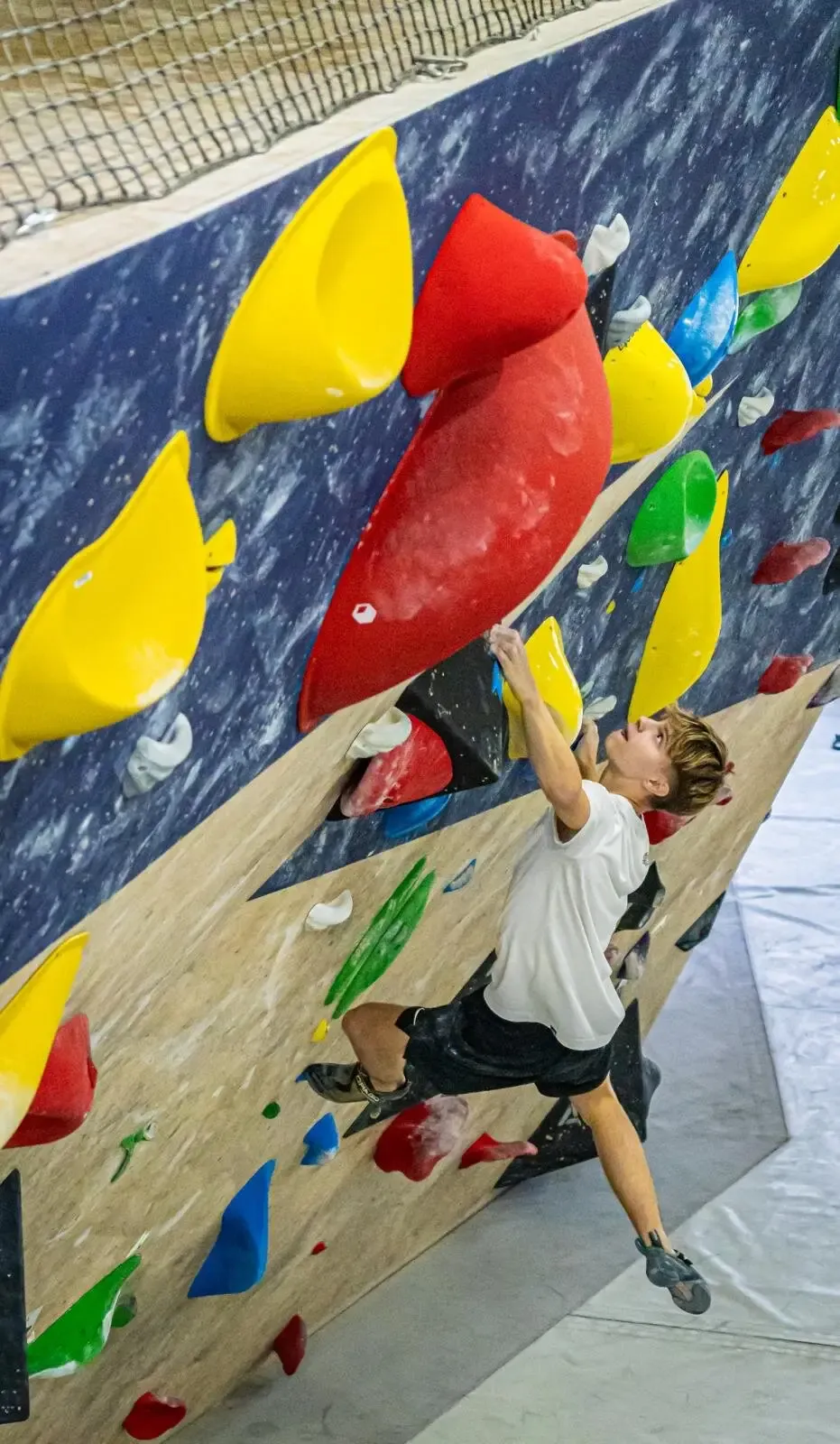
Spray Wall and creativity: training without routine
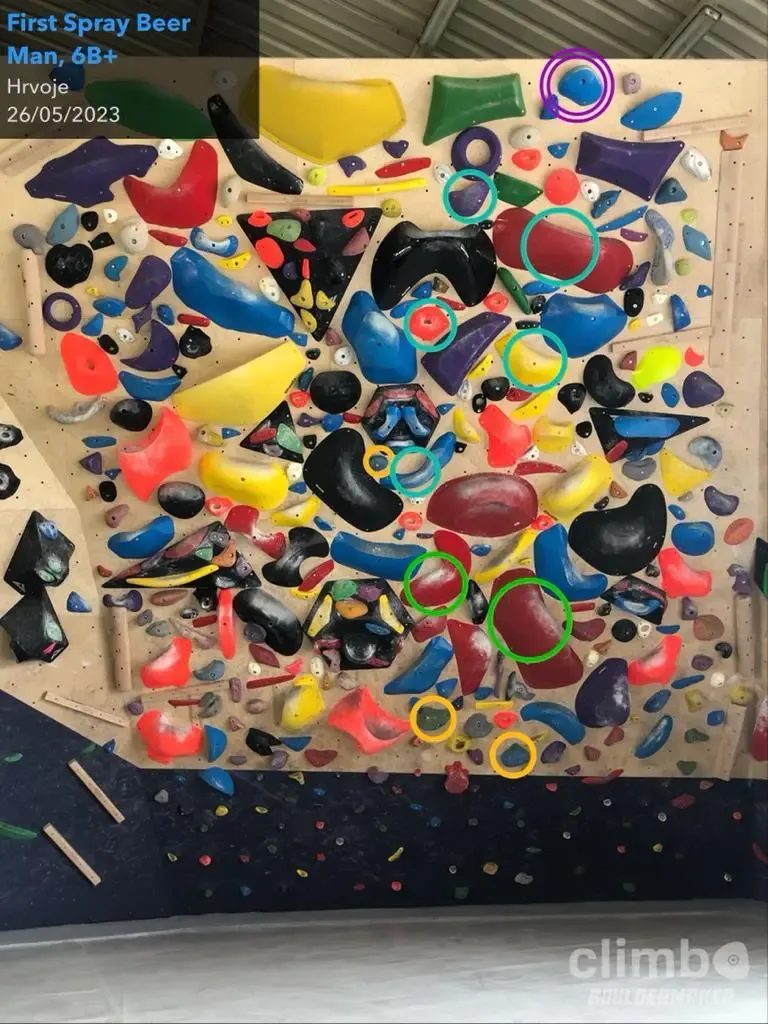
The Spray Wall is a climbing wall packed with holds of different shapes, sizes and orientations, with no pre-set problems or colours dictating the solution. That's exactly why it has become one of the most interesting places for climbers who want to develop technique, strength and the ability to think on the move. Unlike regular boulder problems, where the line is already set, here you create the challenge yourself.
This approach changes the way you experience training. The Spray Wall isn't just for repeating familiar patterns; it encourages exploration. Every exercise can be different, every attempt raises a new question, and every change of hold calls for your whole body to adapt.
Why the Spray Wall develops more than strength
Climbing is often associated with strong arms, but a good climber knows that strength is only one part of moving well. On the Spray Wall, balance, coordination, precise footwork and the ability to read movement really come to the fore.
When holds are packed closely together and face in different directions, you have to make decisions all the time. Which hand do you move first? Where do you place your foot? Should you turn your hip, drop your centre of gravity or change your body position before the next move? Decisions like these build climbing intelligence, not just physical fitness.
The Spray Wall works your whole body. Your back stabilises your position, your core connects your upper and lower body, your legs transfer your weight, and your fingers and forearms control the contact with the holds. Every muscle has its role, which makes training on this wall extremely functional.
Training without routine or a set solution
The Spray Wall's biggest advantage is freedom. You can create a three-move problem, a technical sequence with precise footwork or a long endurance circuit that lasts several minutes. One day the focus might be finger strength, the next footwork, the day after that body control in awkward positions.
Unlike routine repetition, there's no autopilot here. Even a simple exercise can become demanding if you change the starting hold, the direction of movement or the rules. For example, you might decide that only small footholds are allowed, that every position has to be held for three seconds, or that the problem has to be climbed without any dynamic moves.
Constraints like these spark creativity. You learn how changing one detail changes the whole structure of a problem. That's where the real value of the Spray Wall lies: it doesn't offer one correct solution, but space to look for the best solution in that moment.
How to create a good exercise on the Spray Wall
A good exercise starts with a clear goal. If the goal is technique, the problem doesn't have to be hard. What matters is that the moves call for precise foot placement, calm weight transfer and controlled hip position. If the goal is strength, you can choose smaller holds, bigger spans or moves that demand more core engagement.
To start, it helps to pick a starting position, a finishing hold and a few mandatory holds in between. That gives you a framework, but still leaves enough room to experiment. You then test the moves, adjust the sequence and watch where your body loses stability.
On every attempt, it's worth paying attention to a few things:
- is your foot placed steadily, or is it sliding on the hold
- does your back stay engaged while you pull
- are you using your legs to push, or doing everything with your arms
- can the move be done more slowly, with more control
- is there a more efficient body position before you reach for the next hold
This way of working is especially useful because it builds movement awareness. You're not just repeating what someone else has set, but learning to recognise your own habits, weaknesses and potential.
The Spray Wall for beginners and experienced climbers
The Spray Wall isn't reserved for advanced climbers. Beginners can use it for simple tasks: traversing left and right, practising weight transfer, placing their feet quietly or lowering off holds with control. This approach helps you understand how your body works on the wall and why climbing isn't just about pulling with your arms.
More experienced climbers can use the Spray Wall for specific goals. They can recreate moves that give them trouble on certain problems, build endurance through longer sequences or develop maximum strength on short, intense problems. In that sense, the Spray Wall becomes your personal climbing laboratory.
In a modern gym like Boulder Zona, where alongside the Spray Wall you also have the Moon Board, Kilter Board, Campus Board and zones for warming up and stretching, you can link different types of training into a meaningful process. The Spray Wall remains the space where structured work meets play.
Creativity as part of climbing progress
Your climbing improves when body and mind develop together. That's exactly what the Spray Wall asks for: physical effort, but also constant thinking. Every move has a reason, every position offers a chance to learn, and every repetition can reveal a detail you missed before.
That's why the Spray Wall is a valuable tool for anyone who wants to avoid monotonous training. It encourages you to ask questions, change your approach and build your own style of movement. Sometimes the solution will be a powerful move, sometimes a precise foot placement, and sometimes just a better moment to breathe and steady yourself.
Training on the Spray Wall never has to look the same twice. One wall can offer hundreds of possibilities, from short technical tasks to intense sequences that test your endurance, concentration and control. It's exactly this combination of freedom and challenge that makes it one of the most creative spaces in a climbing gym.
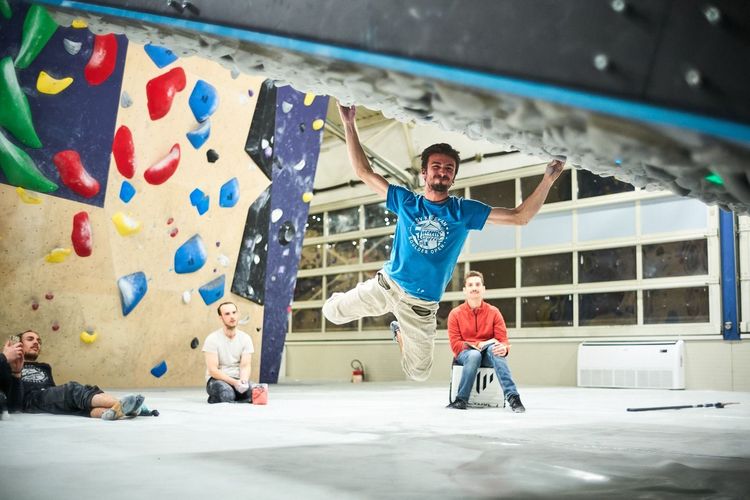
Art Rock League, round 3
Kilter Board: why it's so addictive
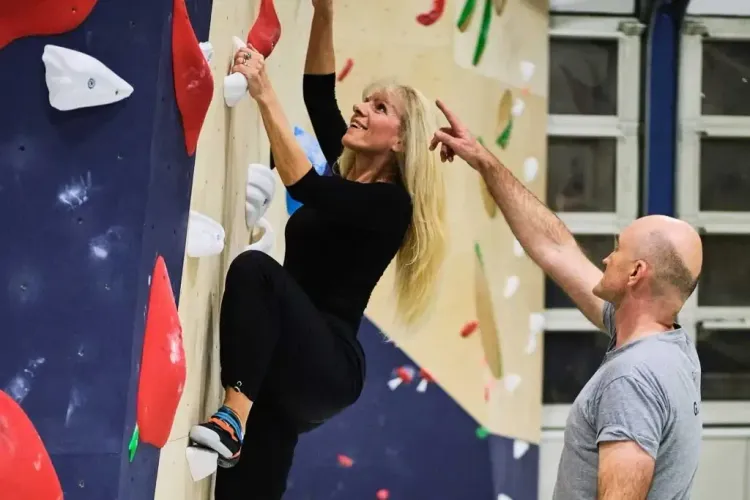
Team building in Zagreb: bring your team together through bouldering challenges