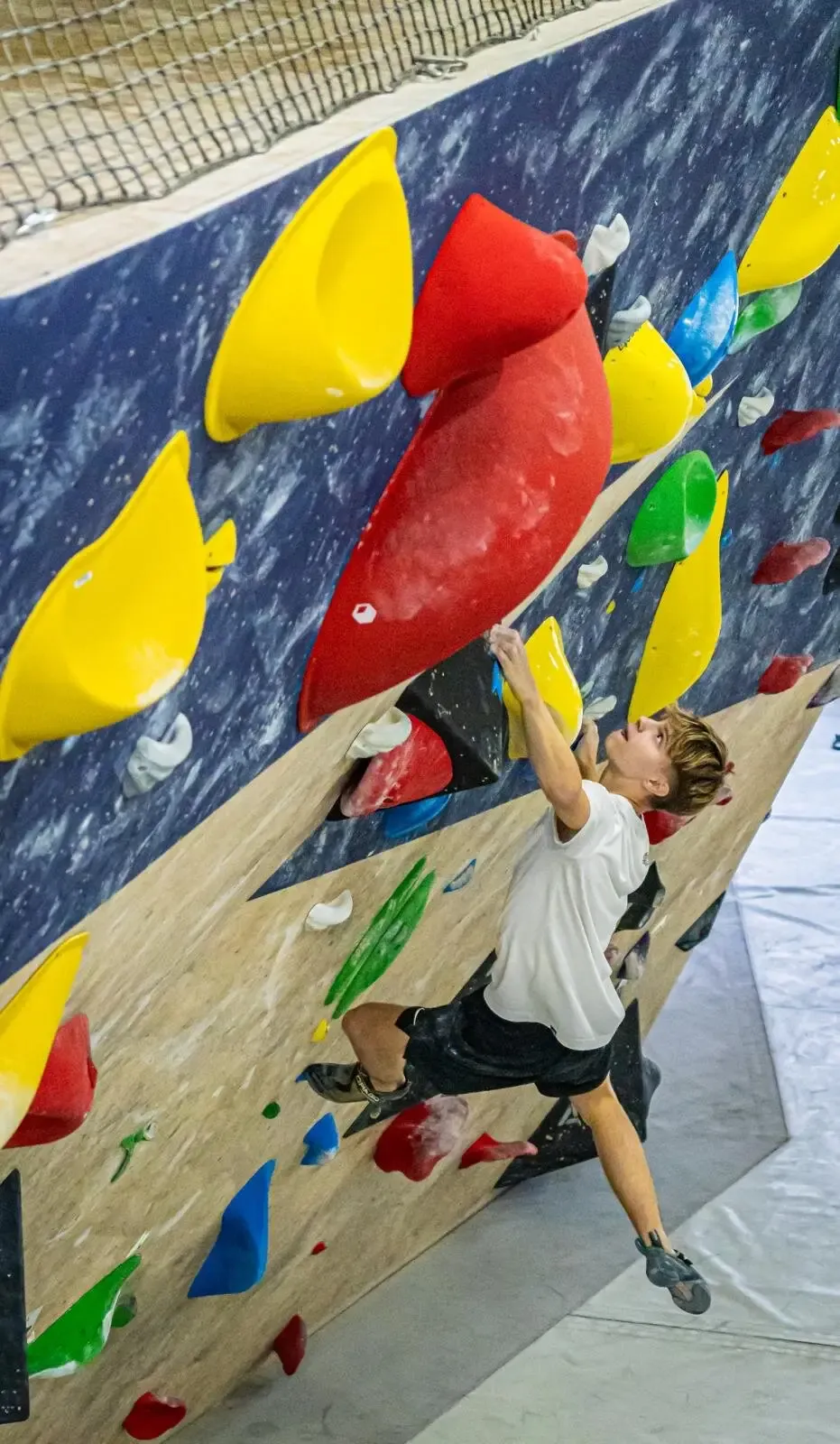
Recovery after climbing: sleep, food and rest
Climbing puts a fair bit of load on your forearms, fingers, shoulders, back and core, even when the session wasn't long. When you climb demanding boulder problems, your body produces a lot of force again and again, while your tendons and joints take intense, often static loads. That's why good recovery after climbing isn't a waste of time, but an important part of progress and injury prevention.
How tired you feel straight after training isn't the only measure of the load. Muscles can recover fairly quickly, but your fingers, tendons and connective tissue usually need more time. A good plan therefore combines sleep, proper nutrition, active rest and sensibly spaced training days.
Sleep is the foundation of progress in climbing
Sleep helps your body restore energy and adapt to the load. When you don't sleep enough, it can affect your concentration, coordination and how well you judge moves. This matters especially in bouldering, where one wrong foot placement or a delayed reaction can increase the risk of a fall and an injury.
Most adults do well on roughly seven to nine hours of sleep, but it depends on your age, daily commitments and how intense your activity is. After a hard strength session, dynamic moves or lots of attempts at your limit, your body often asks for a bit more rest.
Simple habits can improve the quality of your sleep:
- going to bed at roughly the same time
- avoiding intense training right before bed
- a light meal if you're hungry after climbing
- less bright light and fewer screens before bed
- a quiet, dark, well-aired room
One bad night's sleep doesn't have to ruin a whole session, but it makes sense to dial back the difficulty, the number of attempts and the intensity of your climbing a little.
Food restores energy and helps your muscles
While you climb, your body uses up stored energy, especially when the session involves a high volume of problems or repeating powerful moves. After training, it's a good idea to give your body carbohydrates, protein and fluids.
Carbohydrates help replace the energy you've used, and protein helps rebuild muscle tissue. A practical post-training meal might be rice, potatoes, pasta or bread with eggs, fish, meat, dairy, pulses or tofu. Fruit, vegetables, nuts and good fats also help keep your diet balanced.
You don't have to eat literally the minute you finish your last problem. What matters more is your total daily food intake and eating regularly. Still, if you won't get a proper meal for a while after training, you can have yoghurt and fruit, a sandwich, chocolate milk or a similar handy snack.
Hydration also affects how energetic you feel and how you perform. It's worth drinking water before, during and after exercise, and after longer activity and heavy sweating it's a good idea to replace electrolytes too.
Breaks between sessions protect your fingers and tendons
How much rest you need depends on your experience, the intensity and the type of training. Easy technical climbing doesn't load your body the same way as max attempts, small holds or explosive moves. Beginners often do well with two to three sessions a week, with at least one rest day between harder sessions.
More experienced climbers can train more often, but only by sensibly alternating the load. A day of maximum finger strength work shouldn't automatically be followed by another equally hard session. If you're training on boards or similar intense finger-training tools, bear in mind too that the Campus Board isn't suitable for anyone under 18. Instead of another hard day, a better choice is often light technique work, mobility, walking or complete rest.
Signs you might need a longer break include:
- an unusually weak grip
- persistent tenderness in a finger or elbow
- pain during your warm-up
- poorer coordination and low motivation
- fatigue that doesn't go away after your usual rest
Pain isn't normal proof of a good session. Sharp, localised or worsening pain can point to an injury. In that case, stop the activity and, if the symptoms continue, get it assessed by an appropriate health professional.
Active recovery doesn't mean another hard session
Gentle movement can ease stiffness without wearing you out further. A walk, gentle shoulder and hip mobility and very light exercise can all be a good choice between climbing days. Stretch in a controlled way, without forcing a painful range of motion.
At Boulder Zona, the warm-up and stretching areas let you prepare your body properly before climbing and wind down gradually afterwards. Still, stretching can't make up for too little sleep, too little energy intake or too many max sessions.
The best schedule recognises the difference between ordinary tiredness and pain that's a warning sign. When you treat sleep, food and rest as an integral part of training, your muscles get time to rebuild, your technique stays sharper and, in the long run, your climbing becomes safer and better.
Art Rock League, round 3
How to build finger strength without rushing
Team building in Zagreb: bring your team together through bouldering challenges